
109
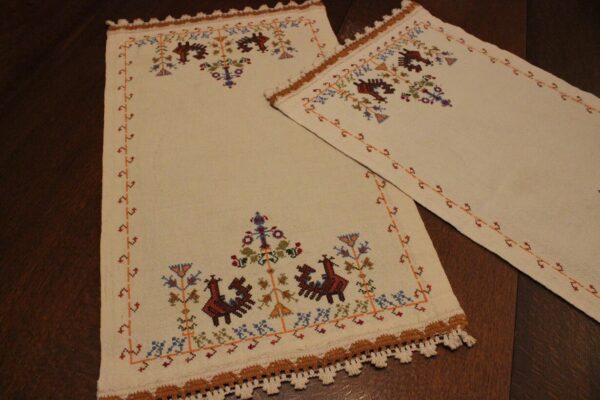
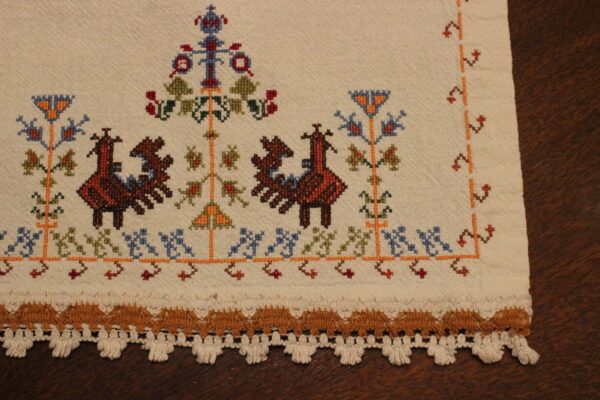
The fabric is called “Arachovitiko”. This is a traditional fabric with pills from the Greek village of Arachova. The design motif was created using a basic pattern and repetition. Cross-stitch was used. The piece has a more traditional “Greek rural/village” character. This is a set consisting of two pieces.
110
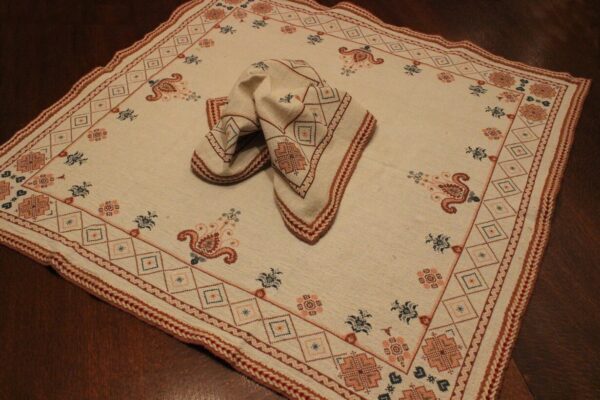
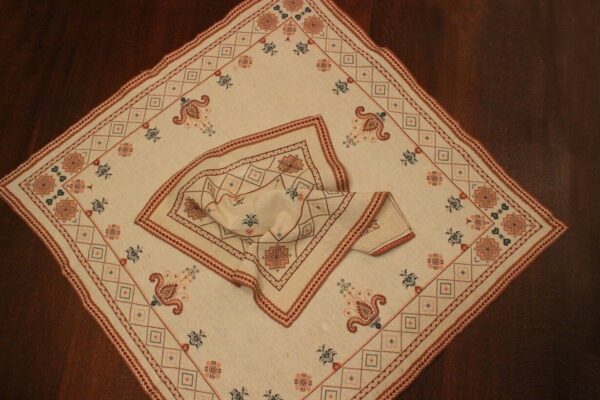
The fabric is called “Arachovitiko”. This is a traditional fabric with pills from the Greek village of Arachova. The design motif was sourced from a magazine. Cross-stitch was used. The piece has a more traditional “Greek rural/village” character. This is a set of three pieces: one large (85×85 cm) and...
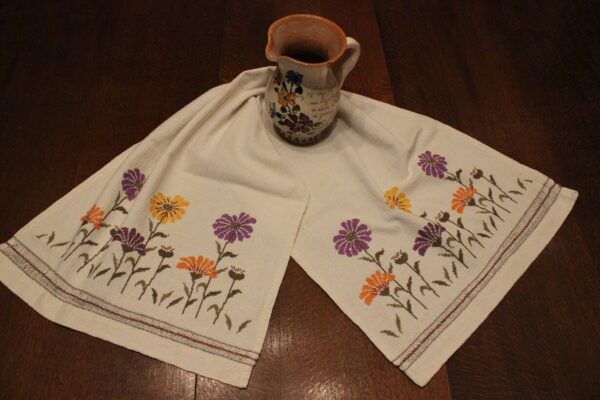
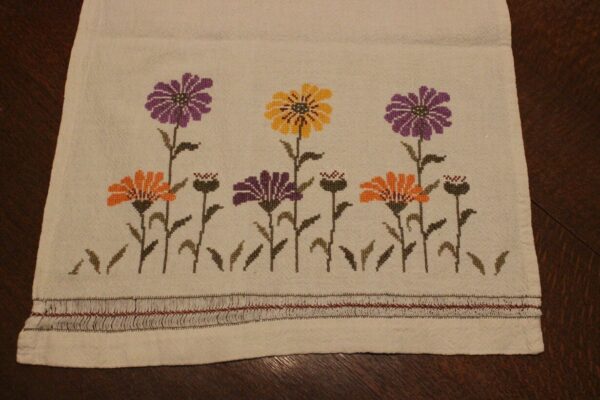
111
The fabric is called “Arachovitiko”. This is a traditional fabric with pills from the Greek village of Arachova. The design motif was sourced from a magazine. Cross-stitch was used. Some threads were removed to give the appearance of lace. The piece has a more traditional “Greek rural/village” character.
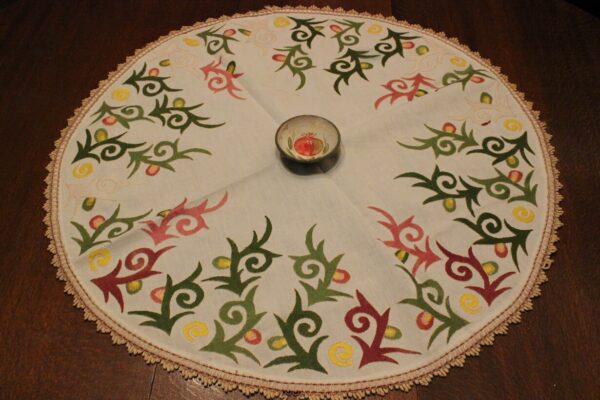
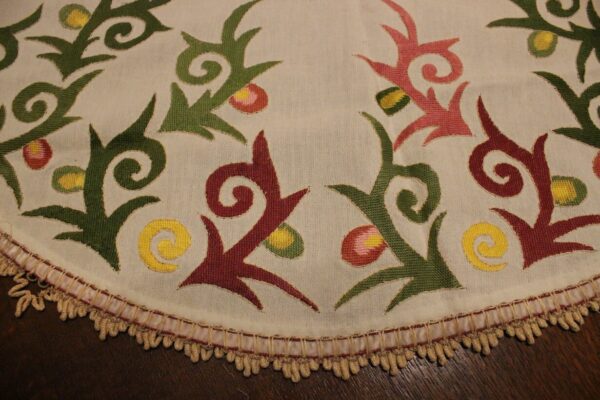
112
The canvas is fine. The design motif was sourced from a magazine. The stitch is half Gobelin stitch, and the outline is stem stitch (also known in Greek as “rizovelonia or anevato”) in gold thread.
113
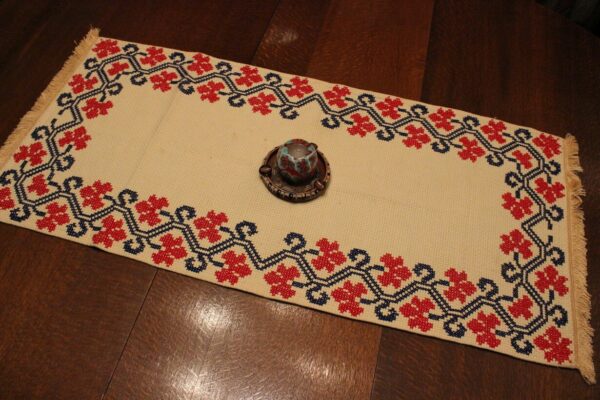
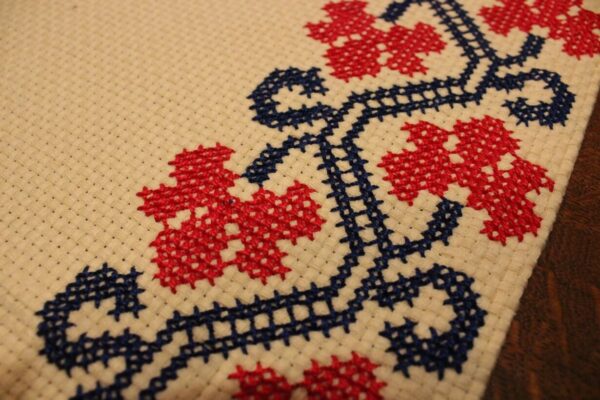
The fabric is 6-thread linen. The design motif was sourced from a magazine. Cross-stitch was used. The piece has a more traditional “Greek rural/village” character. It was later complemented by the two smaller works, No.151.
114
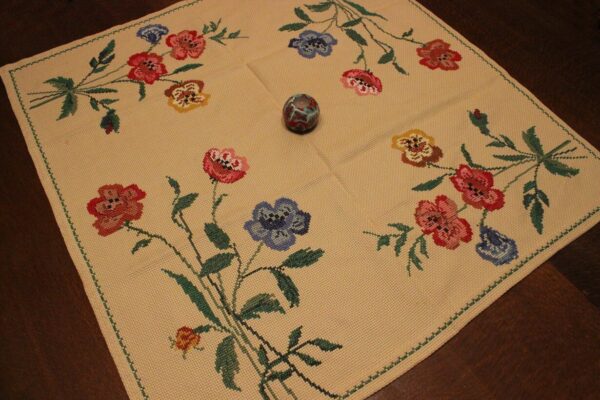
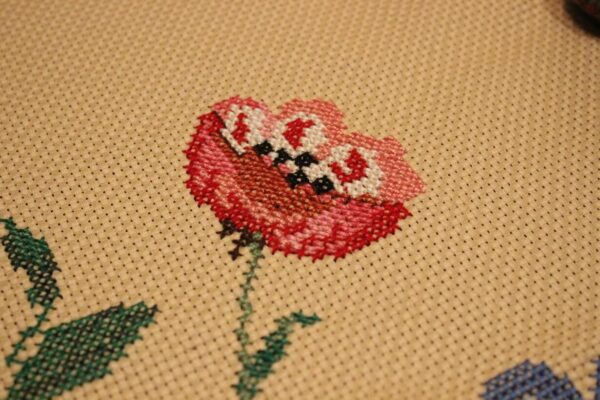
The fabric is 6-thread linen. The design motif was sourced from a magazine. Cross-stitch was used.
115
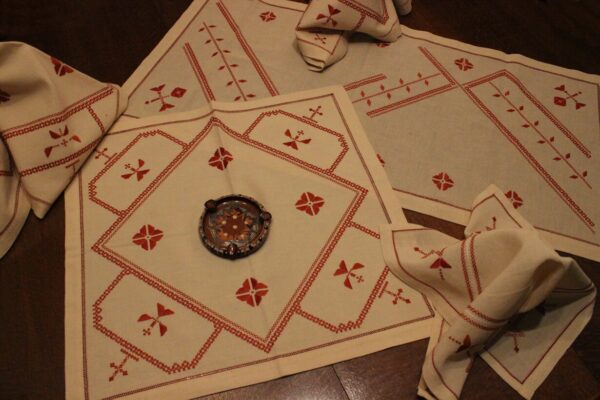
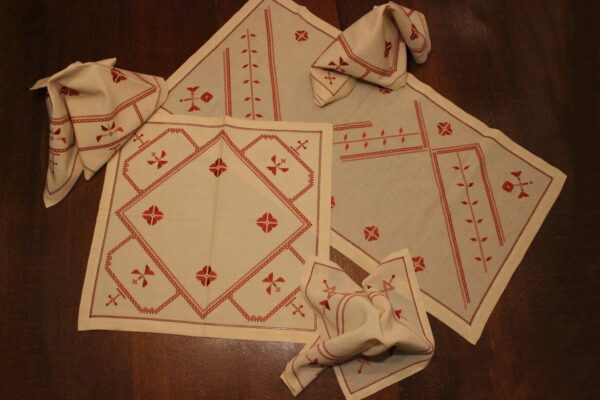
The fabric is etamine. The design motif was sourced from a magazine and used to create this composition. Satin stitch was used. This is a set consisting of 1 large and 4 smaller artworks: one piece of 88×45 cm, three pieces of 48×48 cm, and one piece of 40×40 cm.
Distinctive
116
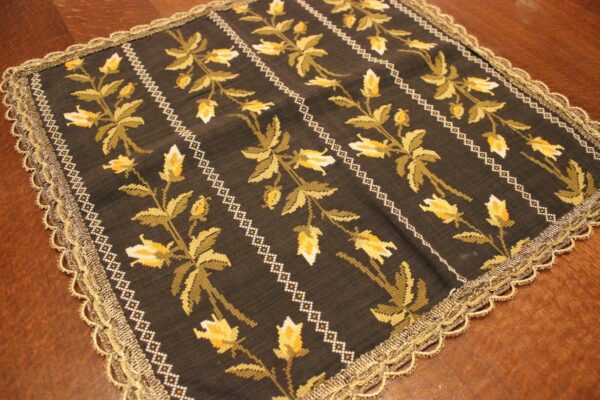
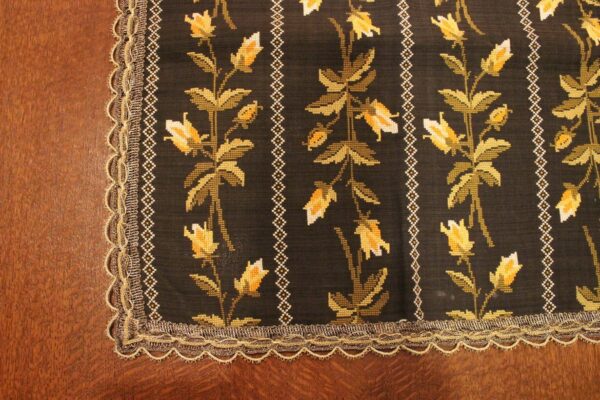
The canvas is fine. The design motif was sourced from a magazine. Cross-stitch was used. This is a set consisting of 2 pieces.
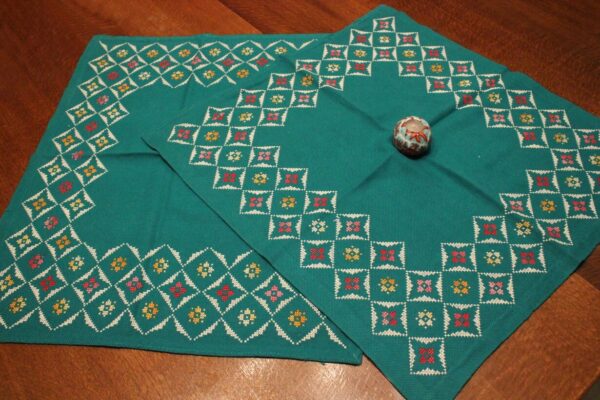
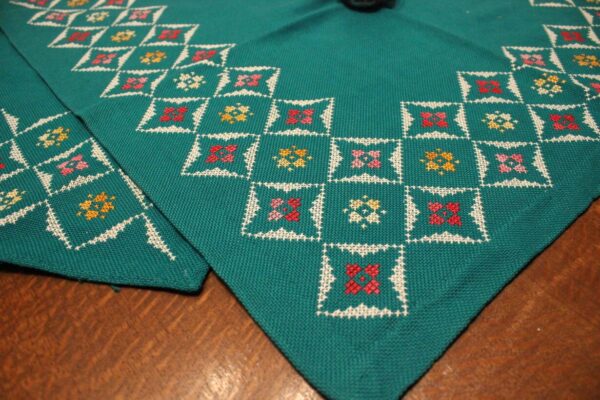
117
The fabric is etamine. The design motif was created using a basic pattern and repetition. Cross-stitch was used. This is a set of two pieces: one of 60×60 cm and one of 64×53 cm.
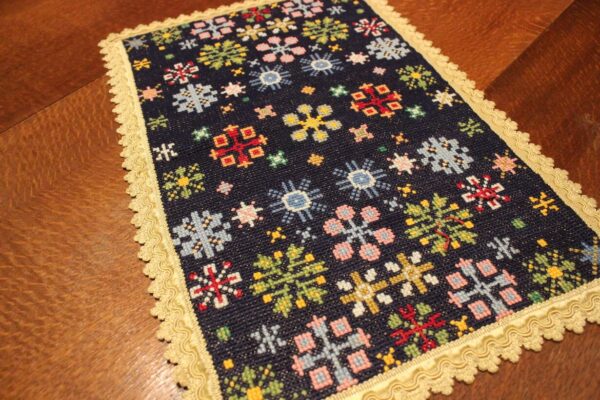
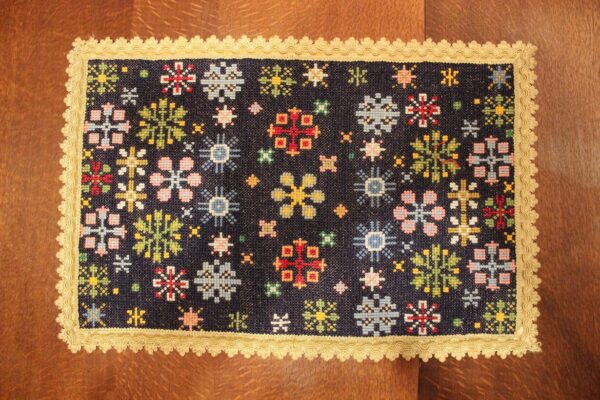
118
The canvas is thick. The design motif was sourced from a magazine and used to create this composition. Cross-stitch was used, using leftover threads.
Distinctive
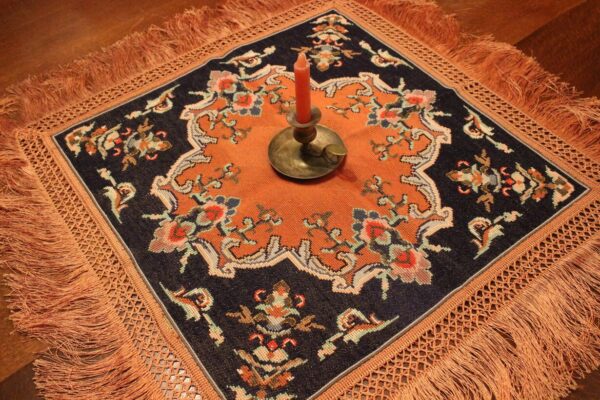
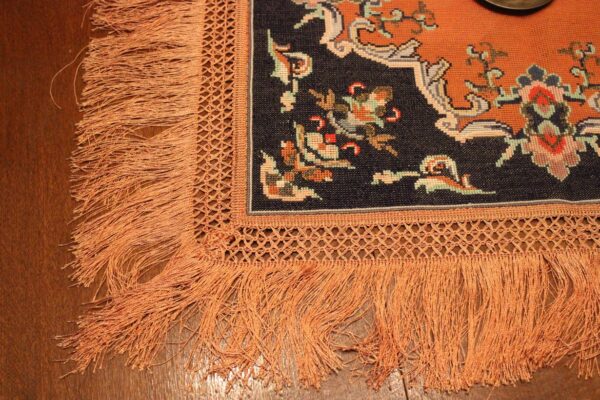
119
The design is the result of 100% improvisation. Cross-stitch was used, using leftover threads. The canvas is medium.
Distinctive
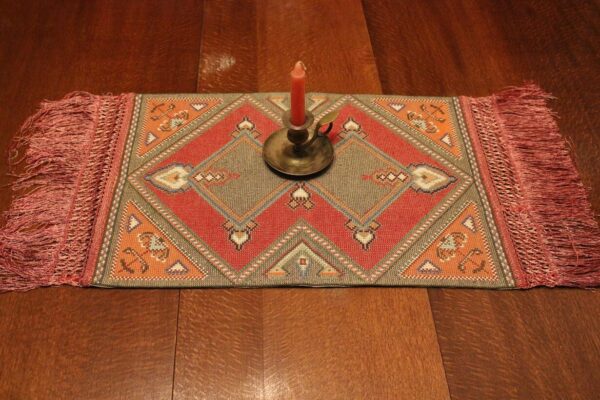
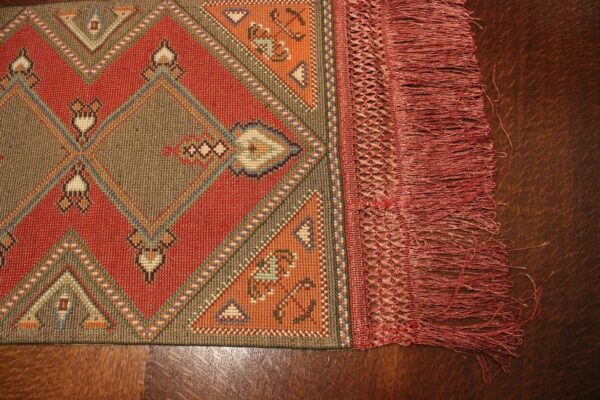
121
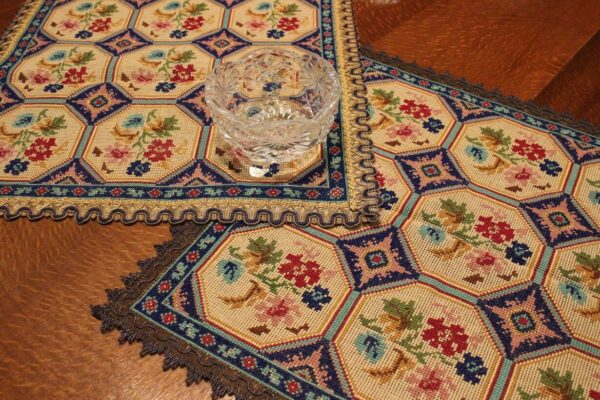
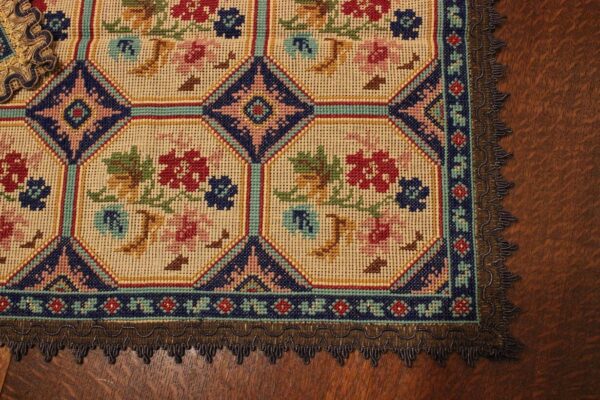
The canvas is medium. The design motif was sourced from a magazine. Cross-stitch was used. This is a set consisting of 2 pieces.
Distinctive
122
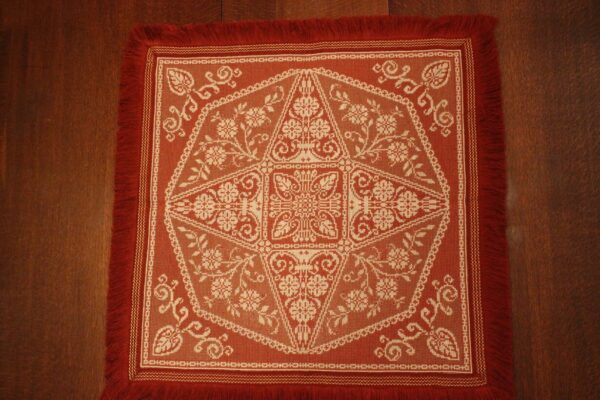
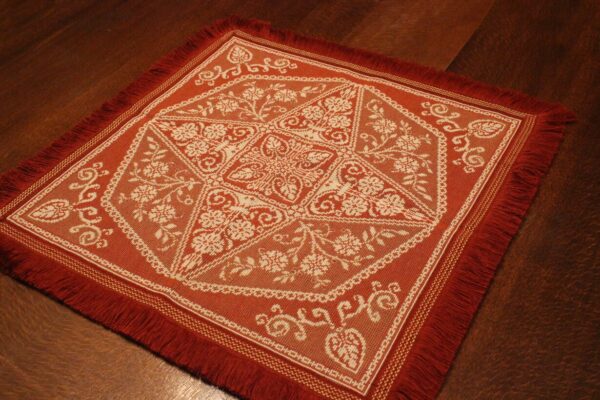
The design was inspired by lace. After careful analysis, it was adapted into cross-stitch embroidery. Cross-stitch was applied with double or triple thread. The canvas is medium.
123
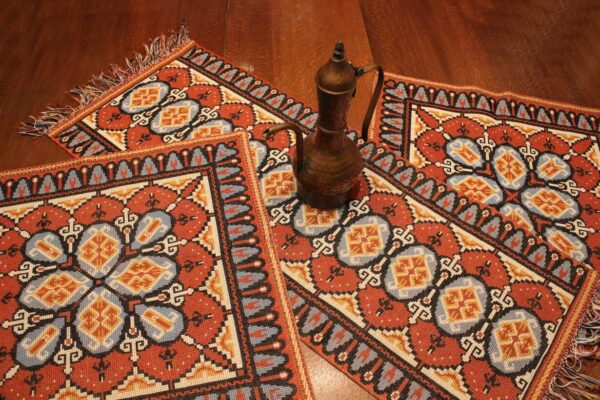
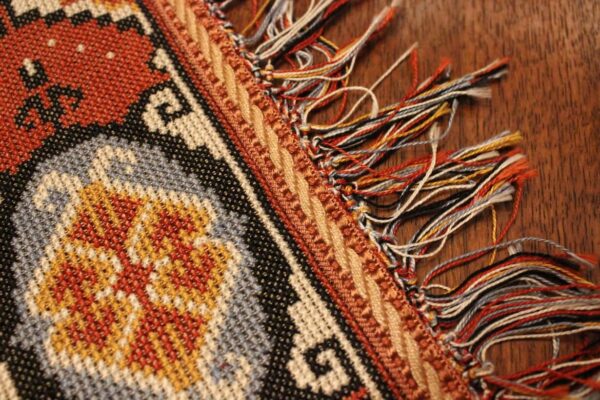
The canvas is thick. The design motif was sourced from a magazine and used to create this composition. Cross-stitch was used. The piece has a more traditional “Greek rural/village” character. This is a set of three pieces: one of 85×35 cm and two of 50×50 cm.
Distinctive
124
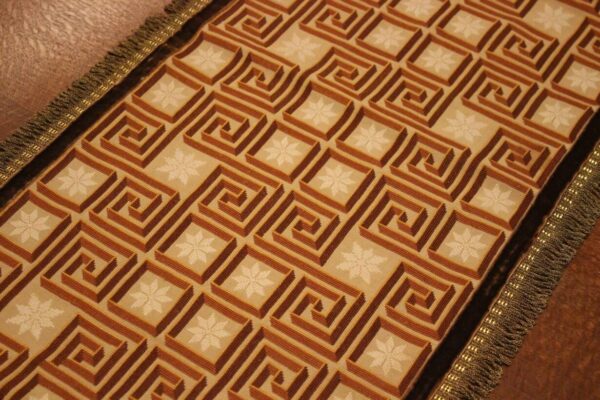
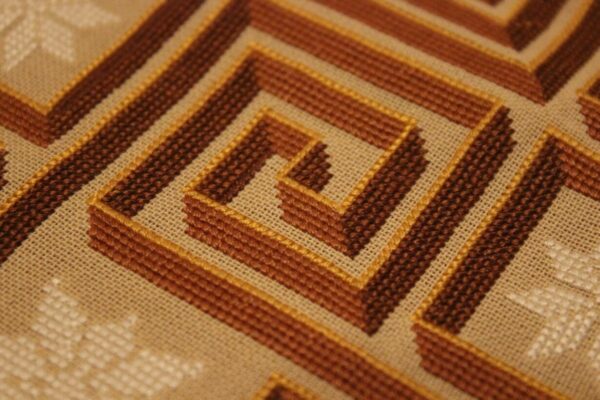
The basic motif is the ancient Greek meander. The design motif was created using a basic pattern and repetition. The canvas is fine. Cross-stitch was used.
Distinctive
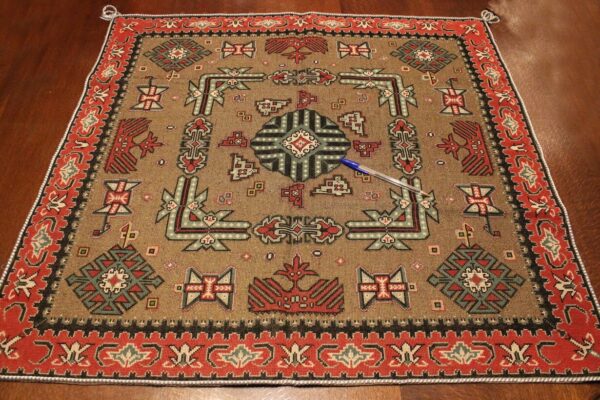
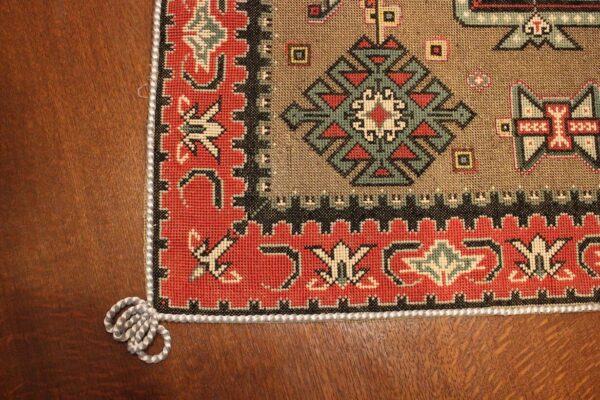
125
The canvas is medium. The design is the result of improvisation, derived from the previous work No.77. Cross-stitch was used. The filling is dark gold thread.
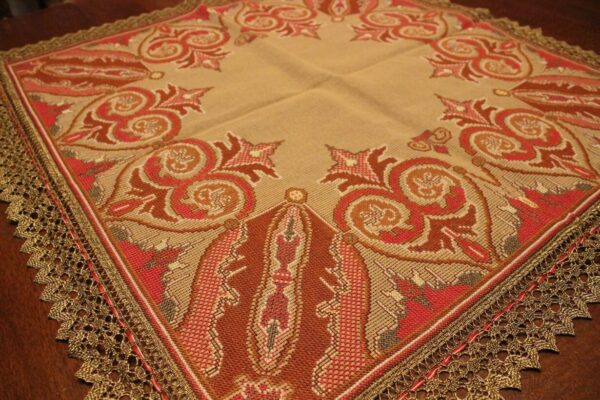
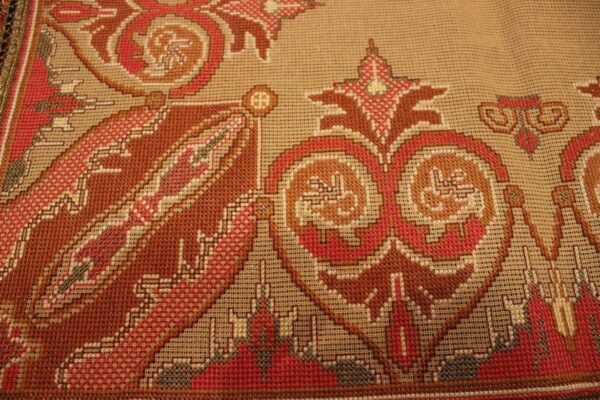
126
The canvas is medium. The design motif was sourced from a magazine combined with improvisation. Cross-stitch was used. The choice of colors was personal. This work later inspired the creation of variation No.68.