
091
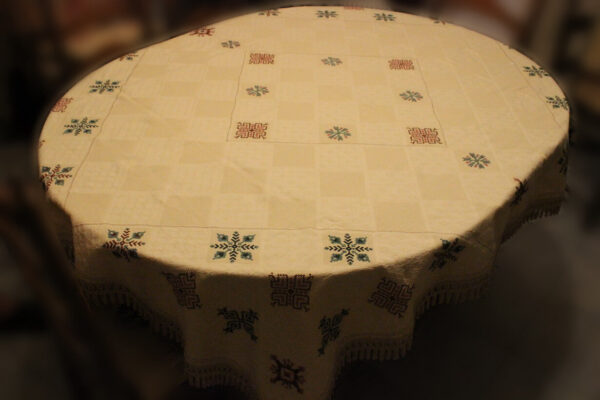
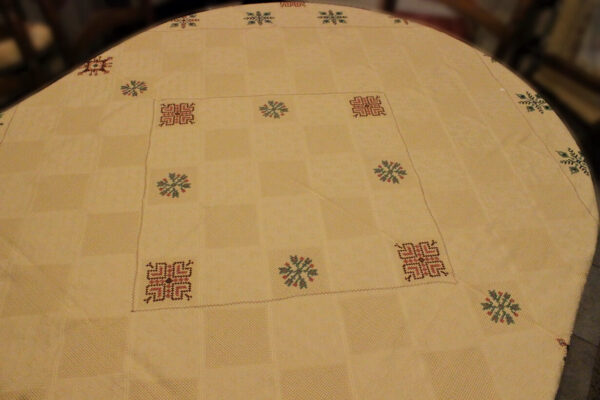
The fabric is linen for a tablecloth. The design came from improvisation and composition. Cross-stitch was used. This piece is used as a tablecloth and it has dimensions 160cm x 130cm.
092
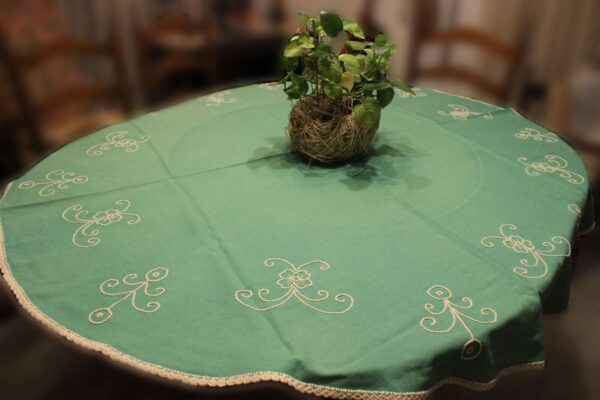
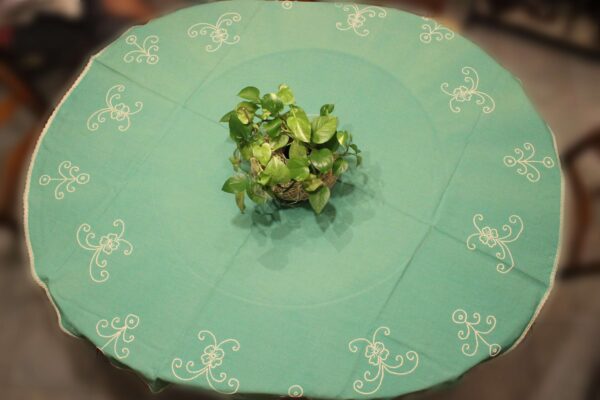
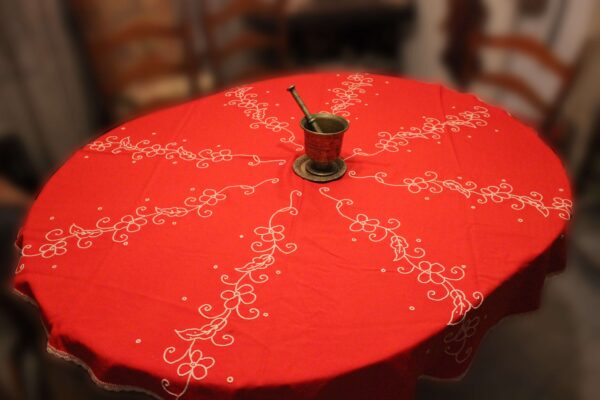
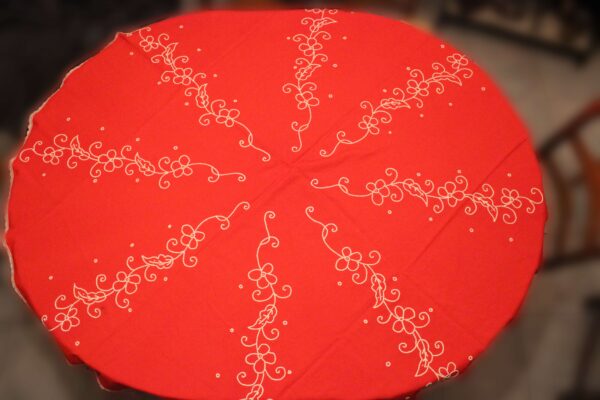
The fabric is linen for a tablecloth. The design came from improvisation and composition. French knot stitch was used. This piece is used as a tablecloth and it has a diameter of 130cm.
093
The fabric is linen for a tablecloth. The design came from improvisation and composition. French knot stitch was used. The artwork is used as a tablecloth. It has a diameter of 130cm.
Distinctive
094
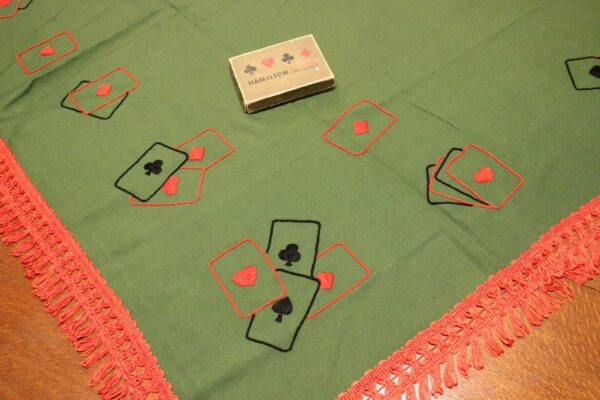
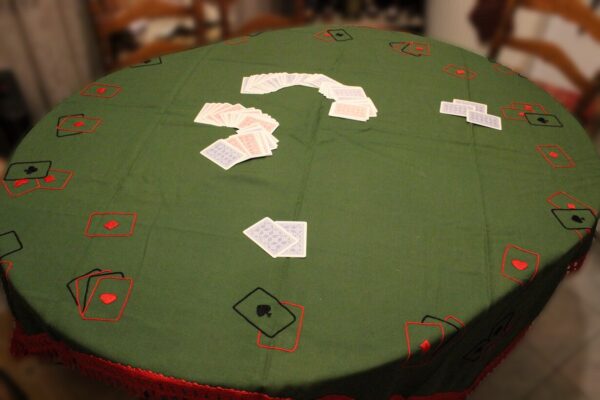
The fabric is linen for a tablecloth. The design came from improvisation and composition based on playing cards. It is not a copy of another work, but a 100% creation from imagination. French knot stitch was used. The piece can be used on New Year’s Day as a card-game tablecloth...
Distinctive
095
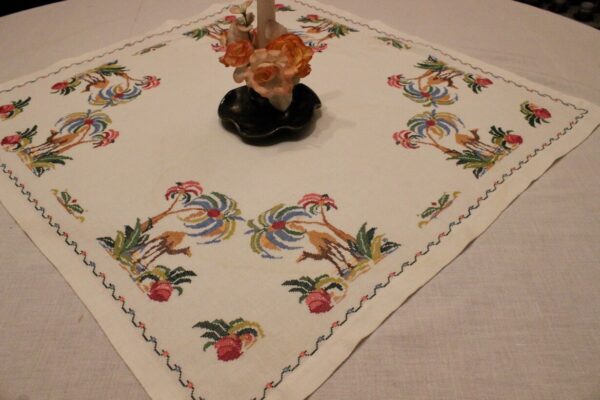
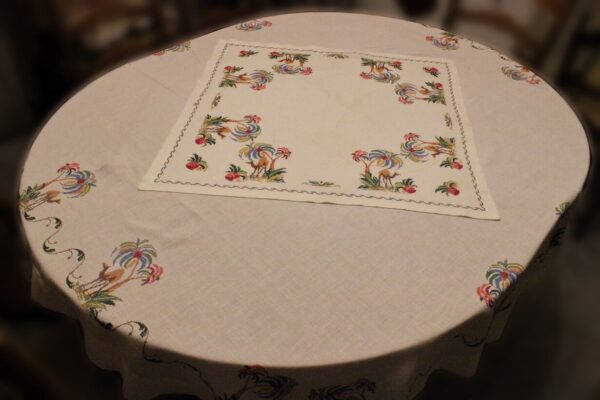
The fabric is etamine. The design motif was sourced from a magazine. Cross-stitch was used. This is among her most important works, as she made it at the age of 12 - one of her early pieces, with an exotic character. At that time, the design was very special because...
Distinctive
096
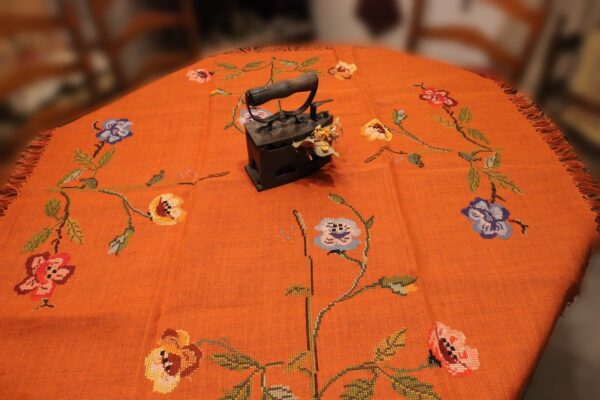
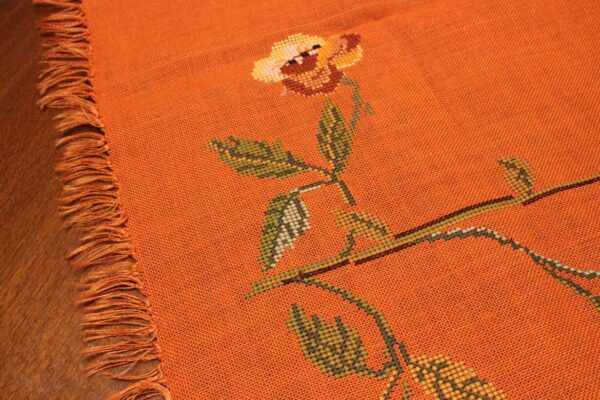
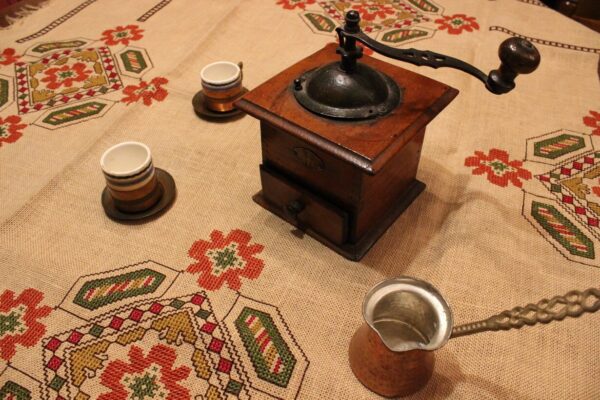
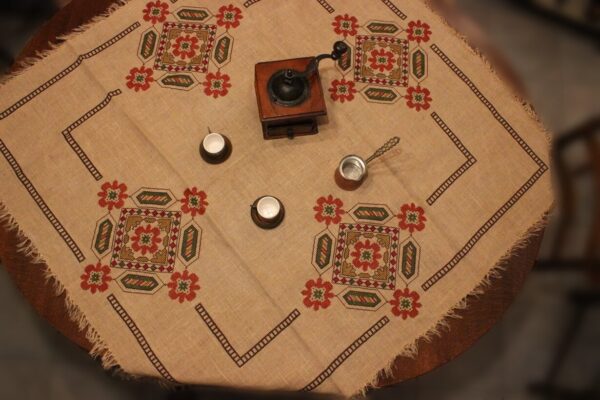
The fabric is sackcloth (Canvas Hessian). The design is the result of 100% improvisation. Cross-stitch was used. The choice of colors was personal. The piece has a more traditional “Greek rural/village” character.
Distinctive
097
The fabric is sackcloth (Canvas Hessian). The design is the result of motif and repetition. Cross-stitch and hand topstitch were used. The choice of colors was personal. The piece has a more traditional “Greek rural/village” character.
Distinctive
098
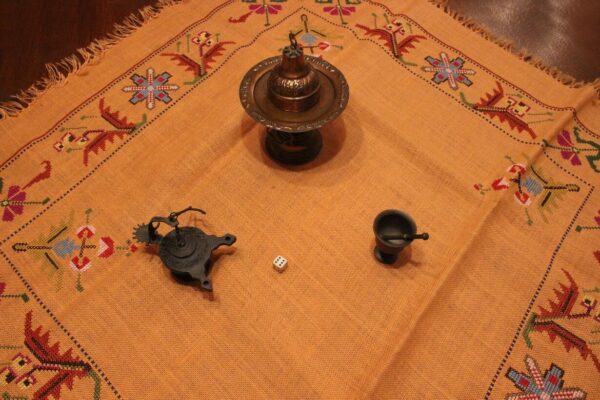
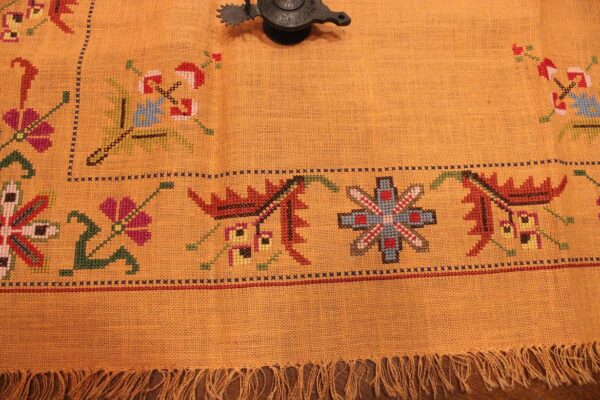
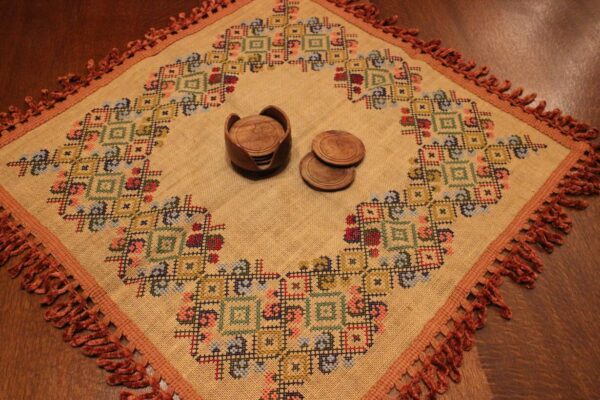
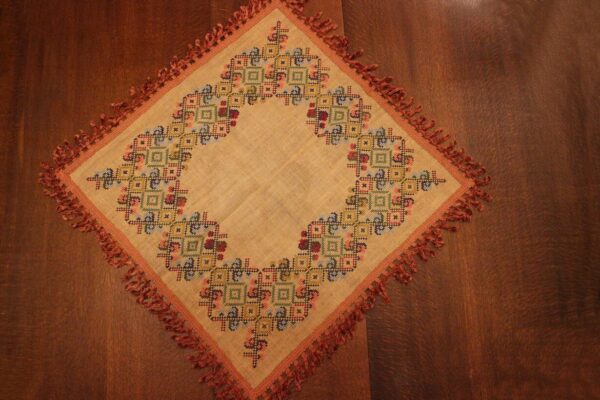
The fabric is sackcloth (Canvas Hessian). The design is the result of motif and repetition. Cross-stitch was used. The choice of colors was personal. The piece has a more traditional “Greek rural/village” character.
099
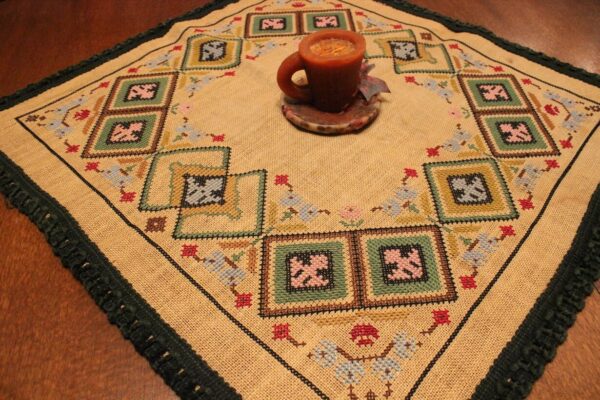
The fabric is sackcloth (Canvas Hessian). The design motif was sourced from a magazine. Cross-stitch was used. The choice of colors was personal. The piece has a more traditional “Greek rural/village” character.
100
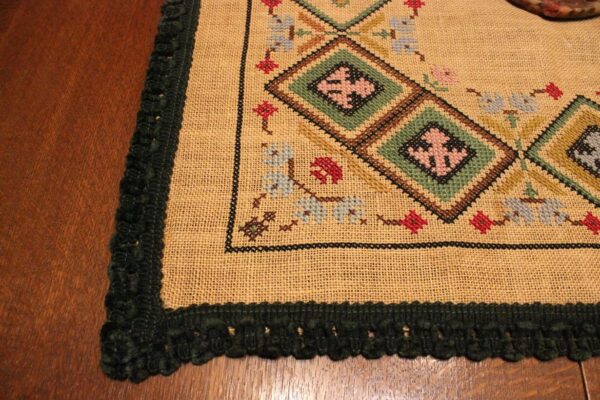
The fabric is sackcloth (Canvas Hessian). The design motif was sourced from a magazine. Cross-stitch was used. The choice of colors was personal. The piece has a more traditional “Greek rural/village” character.
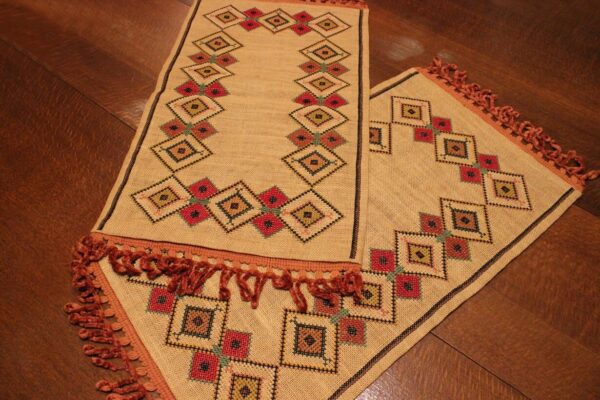
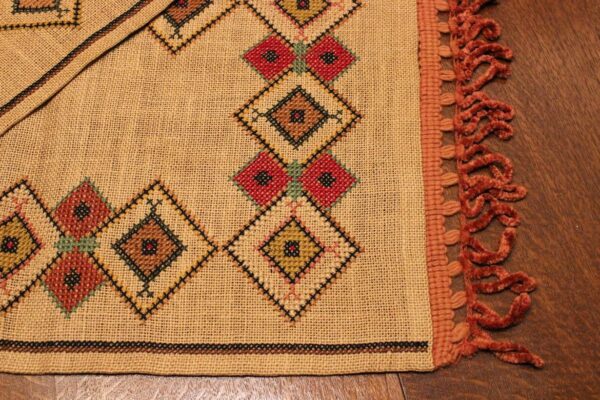
101
The fabric is hessian canvas (sackcloth). The design motif originated from 100% improvisation. Cross-stitch was used. The choice of colors was personal. The piece has a more traditional “Greek rural/village” character.
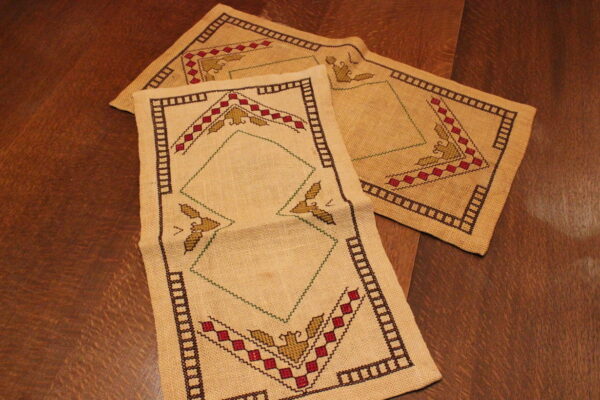
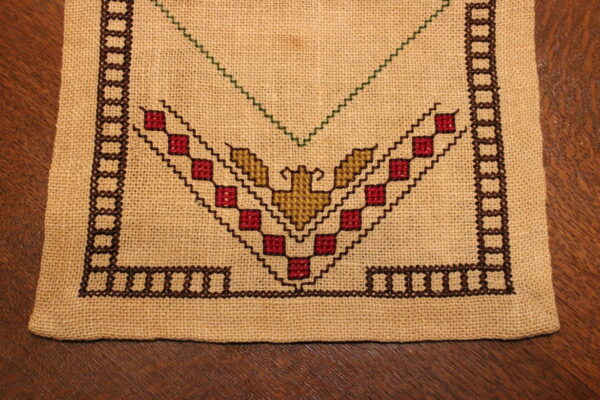
102
The fabric is hessian canvas (sackcloth). The design motif originated from 100% improvisation. Cross-stitch was used. The choice of colors was personal. The piece has a more traditional “Greek rural/village” character. This is a set consisting of two pieces. Only leftover threads and fabrics were used (stash busting).
Distinctive
103
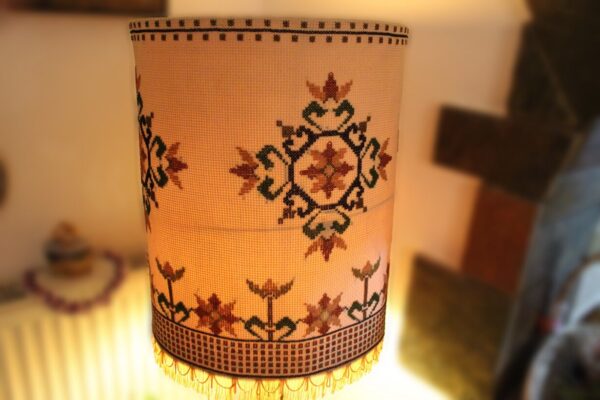
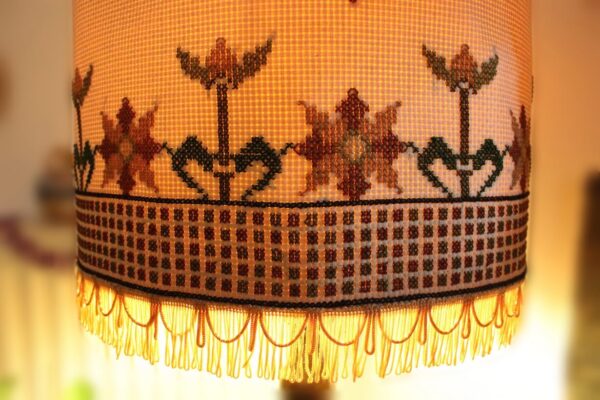
The fabric is 6-thread linen. The design motif was sourced from a magazine and involves composition and repetition. Cross-stitch was used. This is a set of two pieces: one has been used as a lampshade for a table light (120×45 cm) and another one for decoration as a table topper...
104
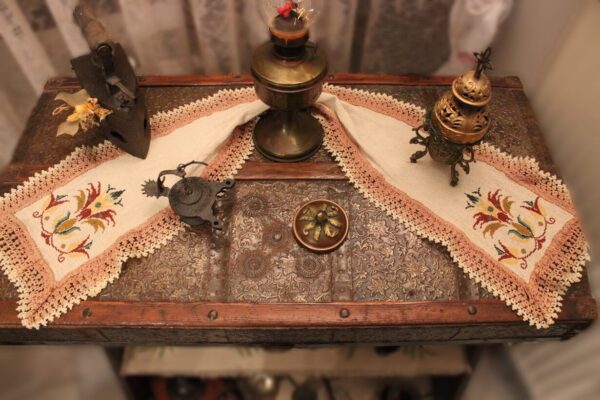
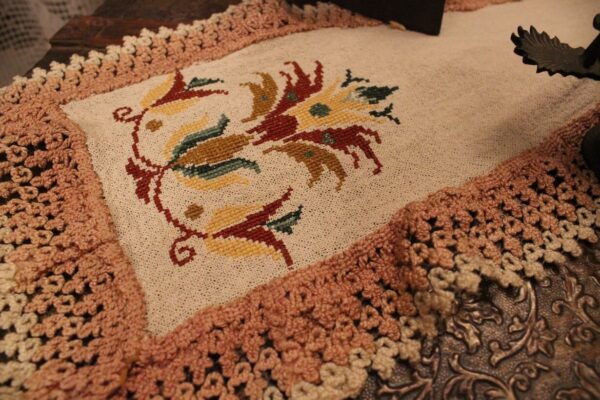
The fabric is called “Arachovitiko”. This is a traditional fabric with pills coming from the Greek village Arachova. The design motif was sourced from a magazine. Cross-stitch was used. The piece has a more traditional “Greek rural/village” character.
105
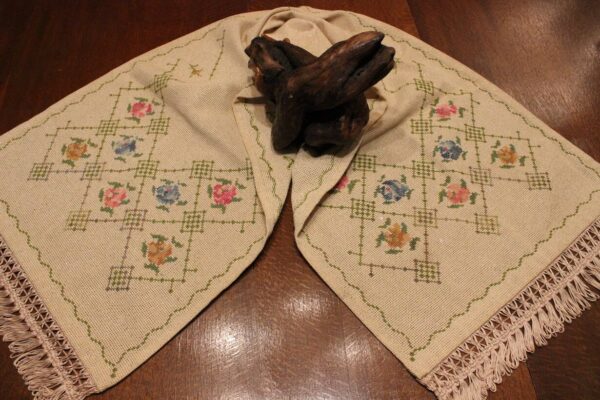
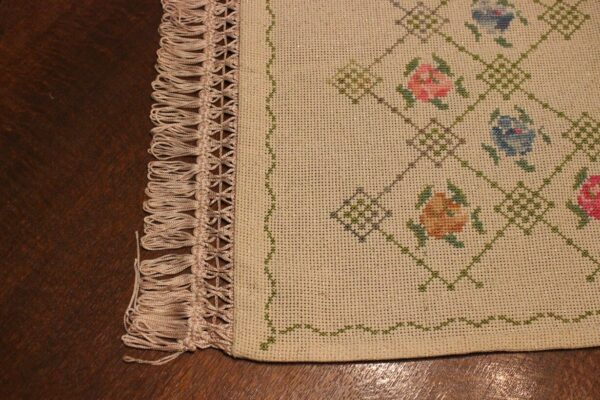
The fabric is 6-thread linen. The design motif was created using a basic pattern and repetition. Cross-stitch was used.
106
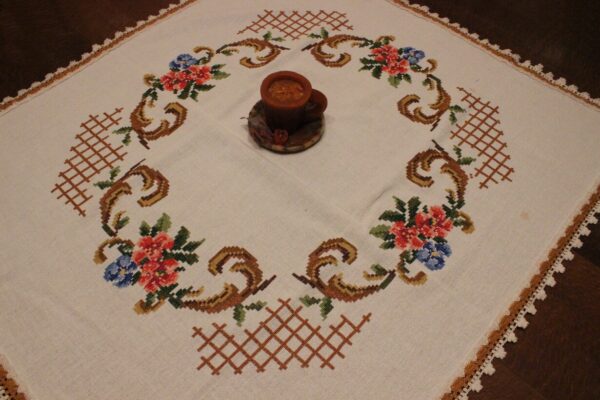
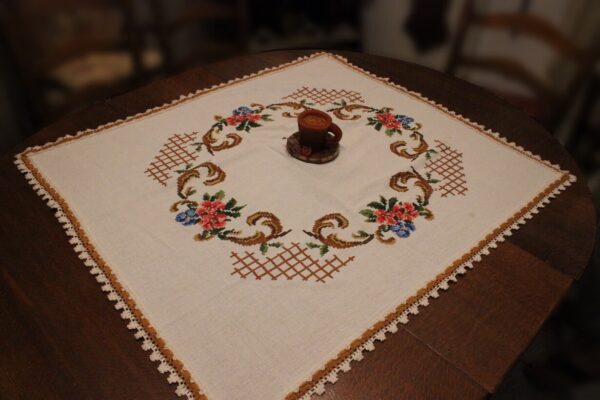
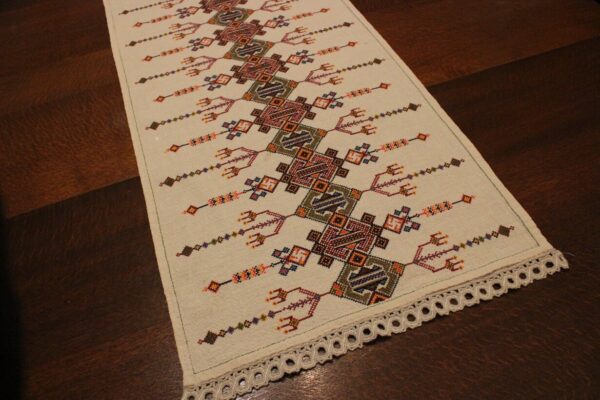
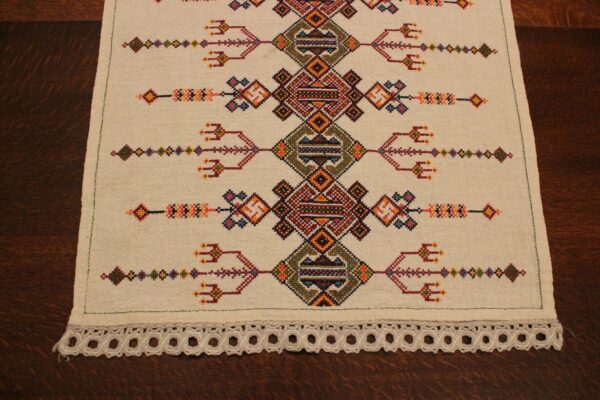
The fabric is called “Arachovitiko”. This is a traditional fabric with pills from the Greek village of Arachova. The design motif was sourced from a magazine. Cross-stitch was used. This piece is part of a set: the same fabric and design were also used to create an improvised handmade women’s...
107
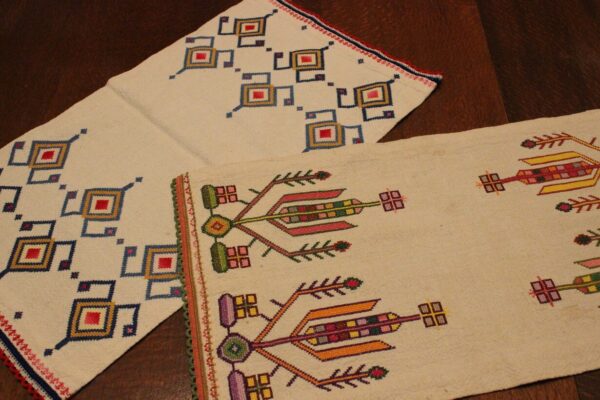
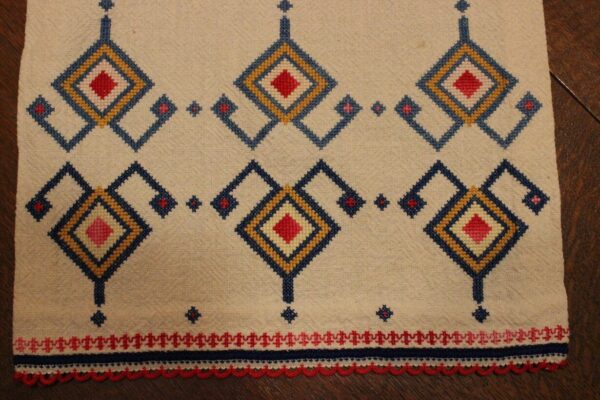
The fabric is called “Arachovitiko”. This is a traditional fabric with pills from the Greek village of Arachova. The design motif was created using a basic pattern and repetition. Cross-stitch was used. The piece has a more traditional “Greek rural/village” character. This design inspired Work No.164, in order to form...
108
The fabric is called “Arachovitiko”. This is a traditional fabric with pills from the Greek village of Arachova. The design motif was created using a basic pattern and repetition. Cross-stitch was used. The piece has a more traditional “Greek rural/village” character.