
025
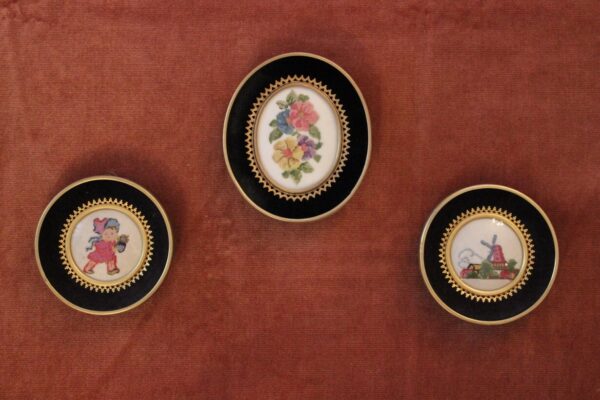
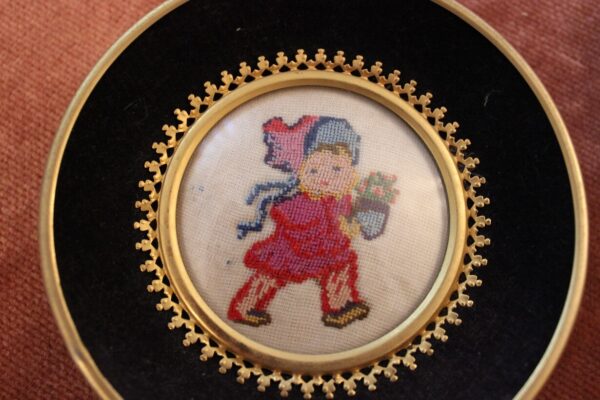
The “Child with Flowers” and “The Dutch Windmill” constitute the artist's first Gobelin works. They were created at a young age (14 years old), during a handicrafts class in the first year of secondary school (Gymnasium), in 1961, in Nafplio, Greece. It is worth noting that the teacher made disparaging...
026
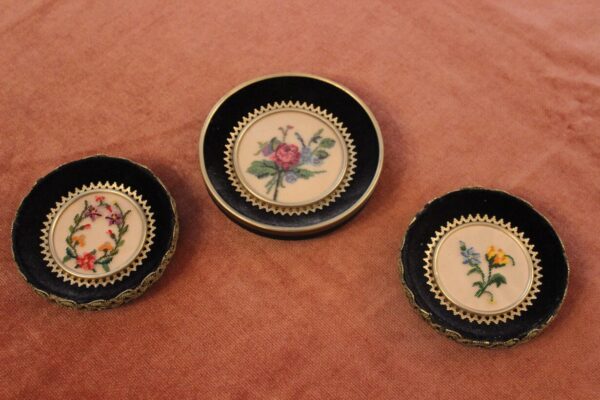
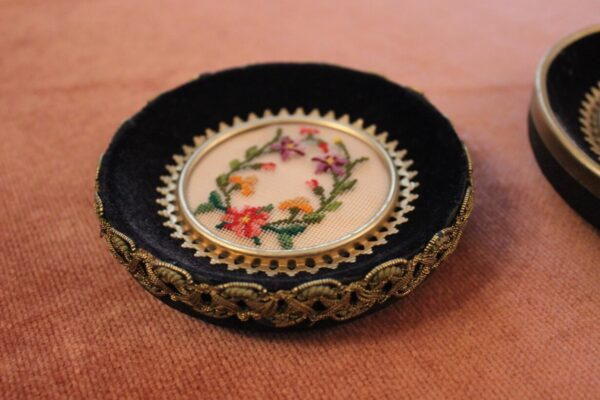
The canvas is Gobelin. The design motif was sourced from a magazine. The stitch is half Gobelin stitch. This is a set with 3 pieces. Diameter is 7 cm.
027
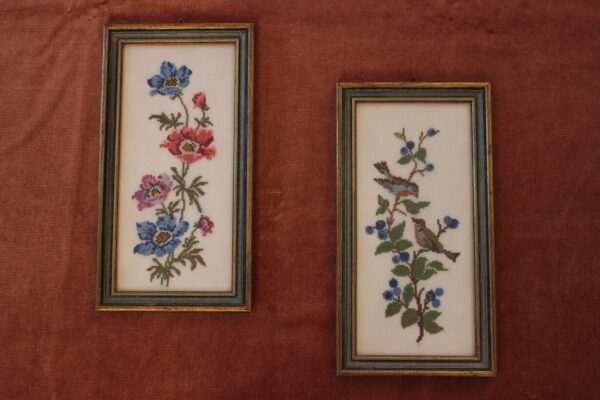
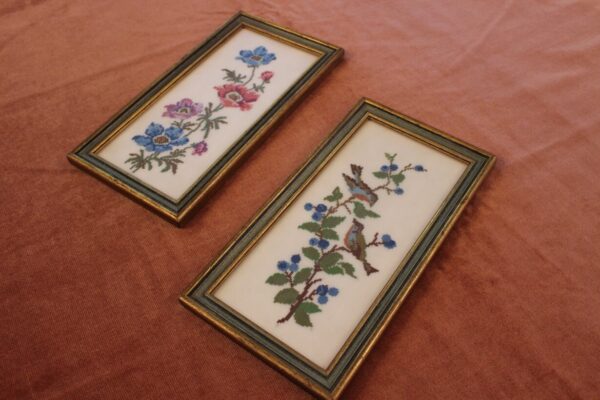
The canvas is fine. The design motif was sourced from a magazine. The stitch is cross-stitch. They were created during the artist's pregnancy to decorate the child’s room. This is a set with 2 pieces.
028
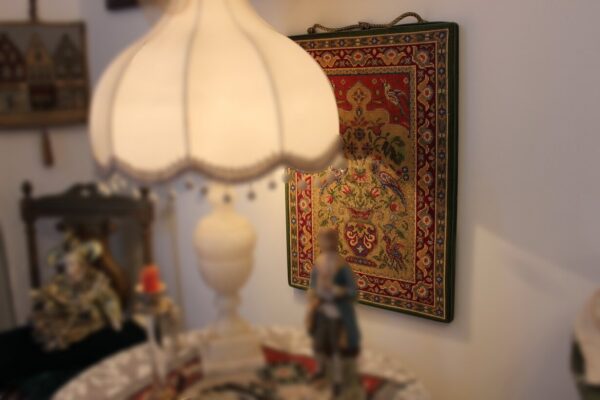
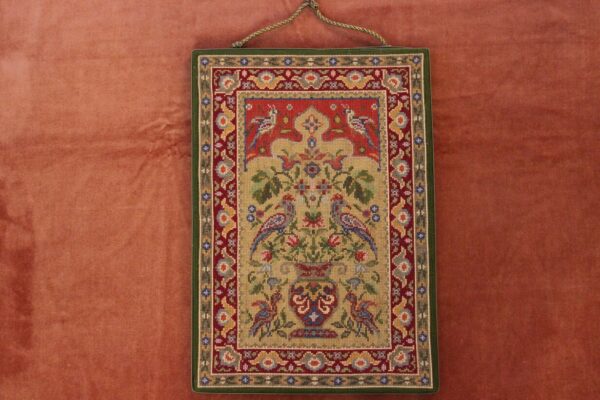
A work with an oriental character. It originates from a magazine design (specifically the patterns for the vase, birds, and branch), but includes improvisation with many personal additions. The canvas is medium, and cross-stitch was used.
030
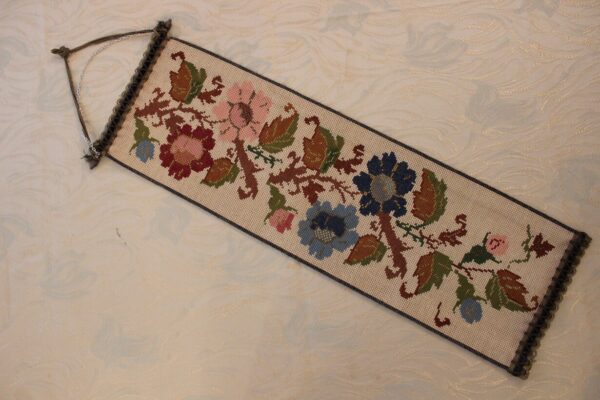
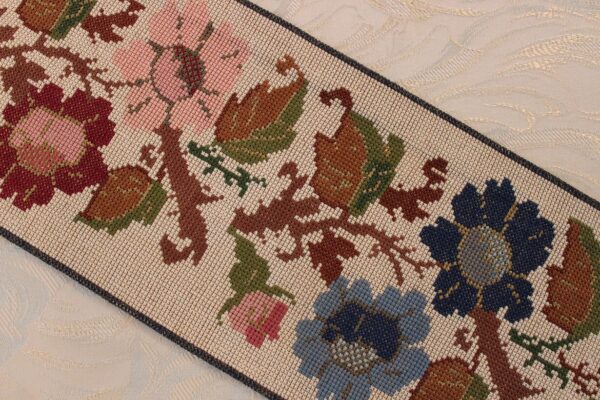
The canvas is medium. The design motif was sourced from a magazine and is a repeating pattern done in cross-stitch.
031
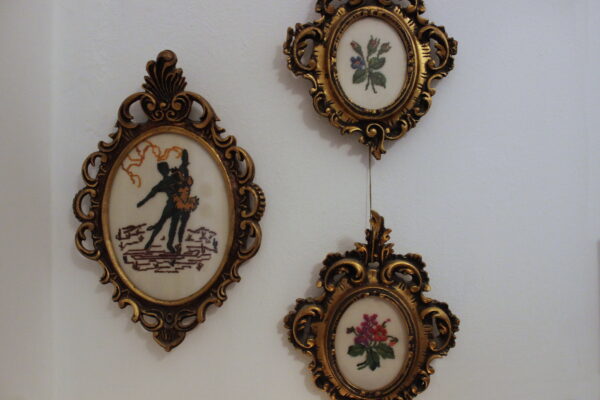
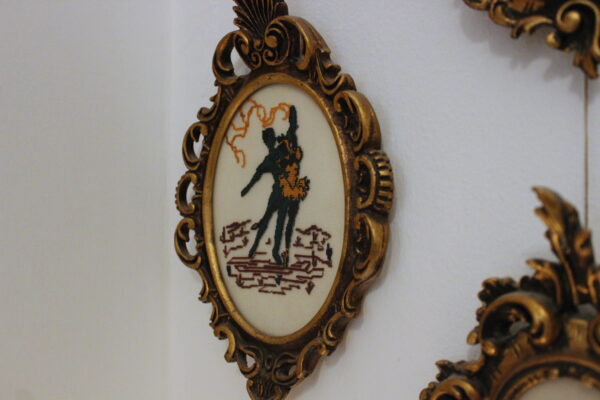
The canvas is Gobelin. The design motif was sourced from a magazine. The stitch is half Gobelin stitch. This is a set consisting of two pieces: one large (15×11 cm) and one small (9×7 cm).
050
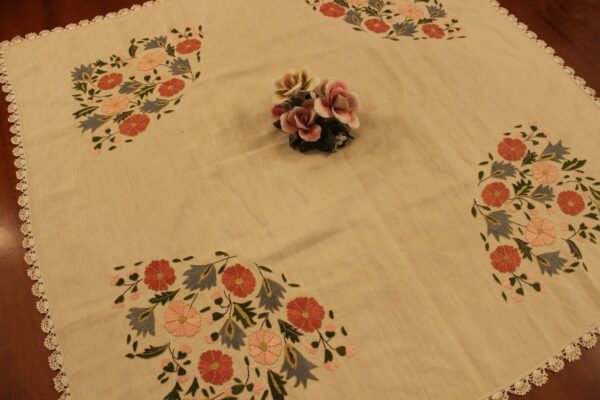
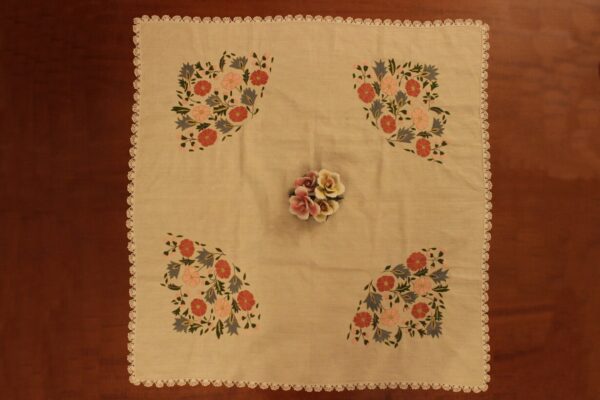
The fabric is linen. The design is based on a magazine pattern and its repetition. Byzantine stitch was used for filling in the motifs, and stem stitch (also known in Greek as “rizovelonia or anevato”) was used to outline the motifs.
Distinctive
051
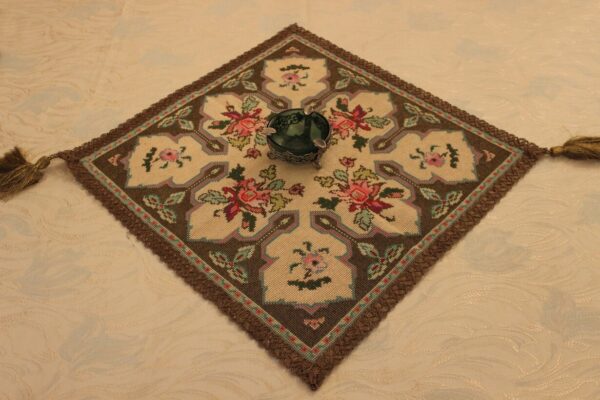
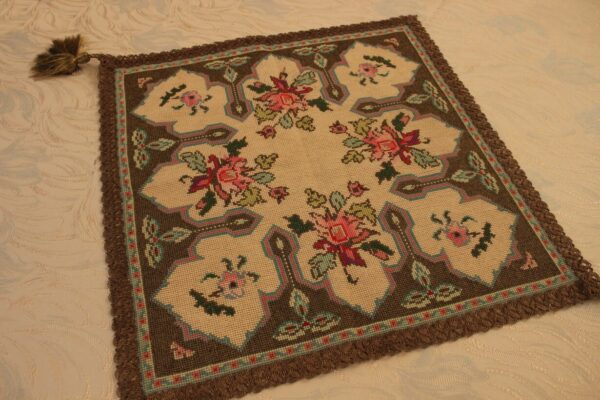
The canvas is medium. The design is the result of 100% improvisation and composition. Cross-stitch was used. The choice of colors was personal.
Distinctive
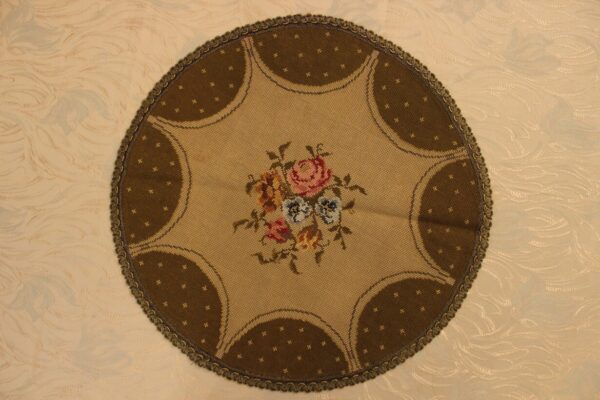
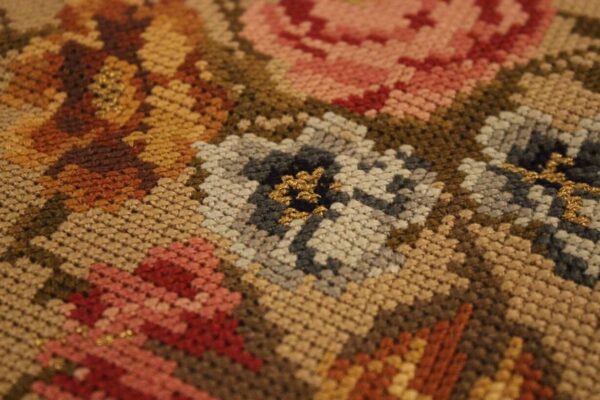
052
The canvas is thick. The design is the result of 100% improvisation and composition, except for the flowers, which come from a magazine. Cross-stitch was used. The choice of colors was personal. The artwork has a diameter of 60 cm.
Distinctive
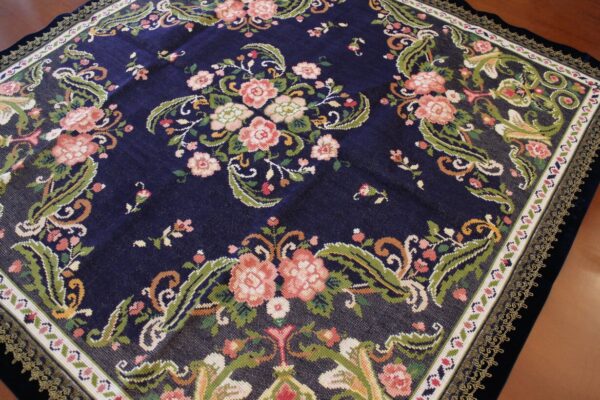
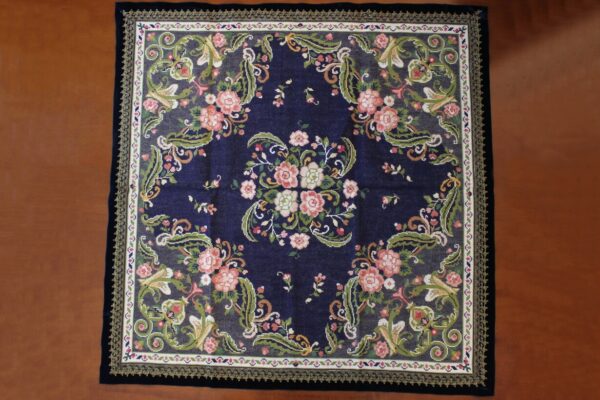
069
The canvas is fine. The design motif was sourced from a magazine. The dark blue filling uses three strands in cross-stitch, while the pale blue filling in the four corners uses one strand.
Distinctive
080
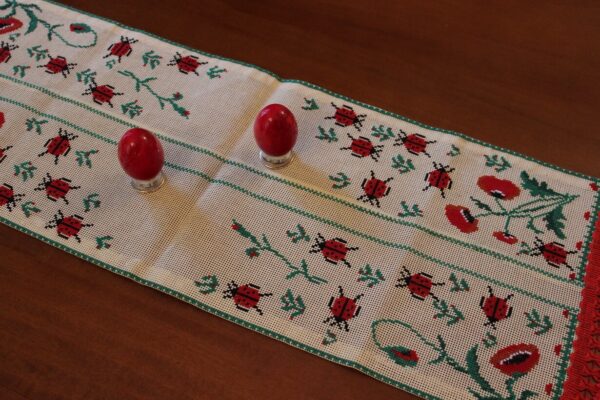
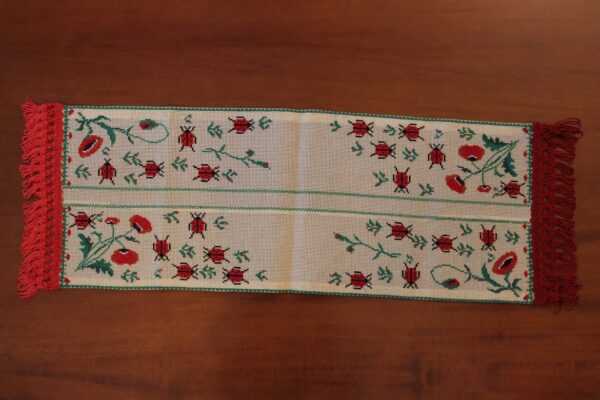
The canvas is medium. The design is the result of 100% improvisation and composition. Cross-stitch was used. Only leftover threads (stash busting) and fabrics were used. Τhe fabrics were joined lengthwise down the middle. The embroidery depicts Easter motifs (ladybugs and poppies).
Distinctive
088
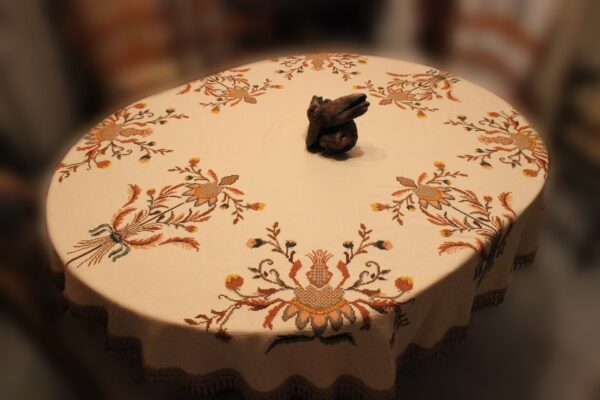
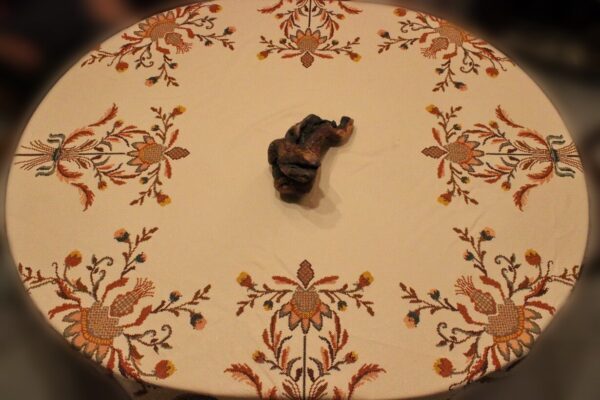
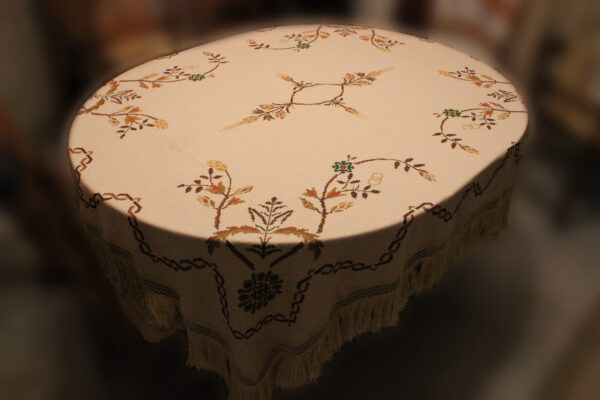
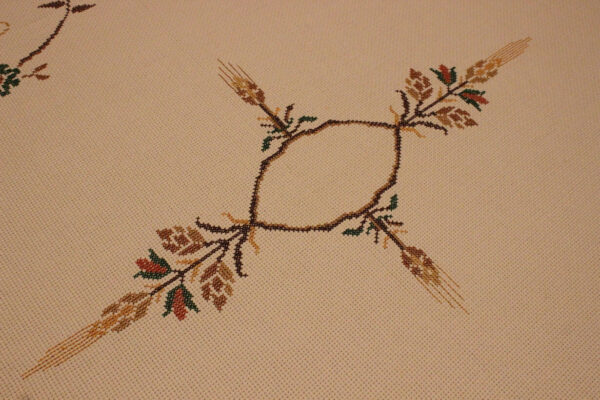
The fabric is six-strand tablecloth fabric. The design motif was sourced from a magazine and involves composition and repetition. Cross-stitch was used. This piece is used as a tablecloth and it has a diameter of 180cm. The same design was also used in Work No.130, in a round shape (rotonda).
089
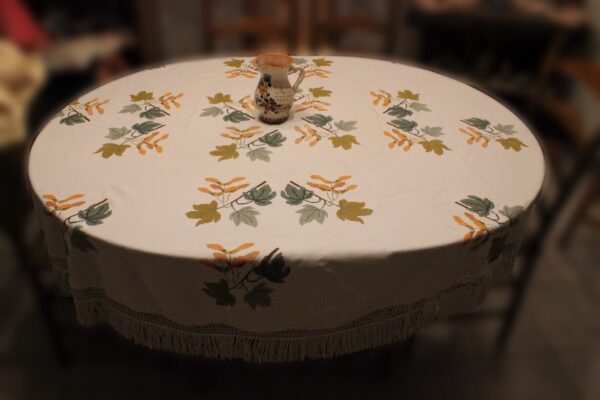
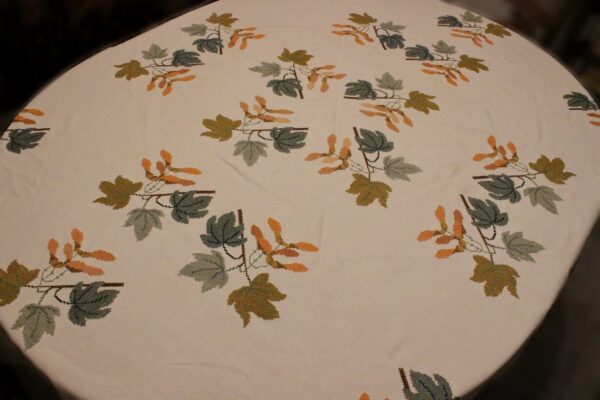
The fabric is six-strand tablecloth fabric. The design came from improvisation and composition. Cross-stitch was used. This piece is used as a tablecloth and it has dimensions 140cm x 170cm.
090
The fabric is six-strand tablecloth fabric. The design came from improvisation and composition. Cross-stitch was used. This piece is used as a tablecloth and it has a diameter of 160cm.
Distinctive
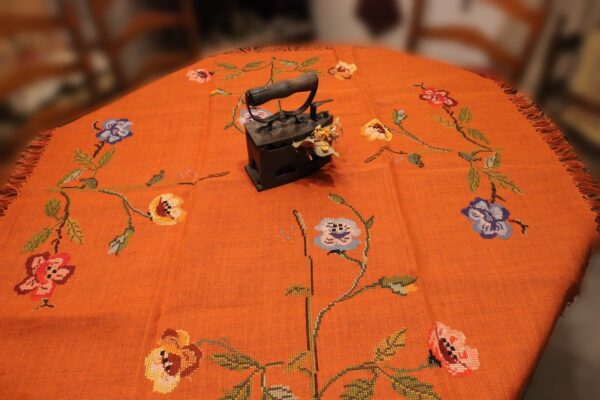
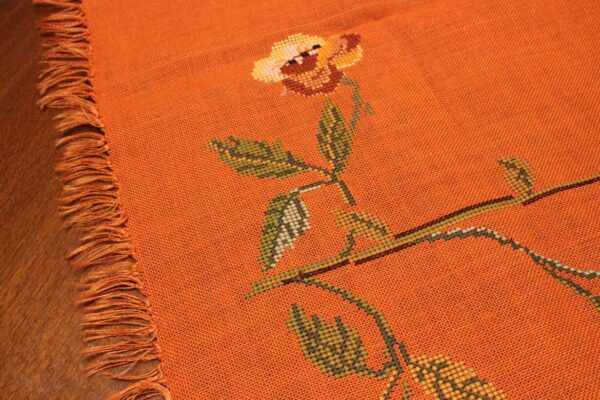
096
The fabric is sackcloth (Canvas Hessian). The design is the result of 100% improvisation. Cross-stitch was used. The choice of colors was personal. The piece has a more traditional “Greek rural/village” character.
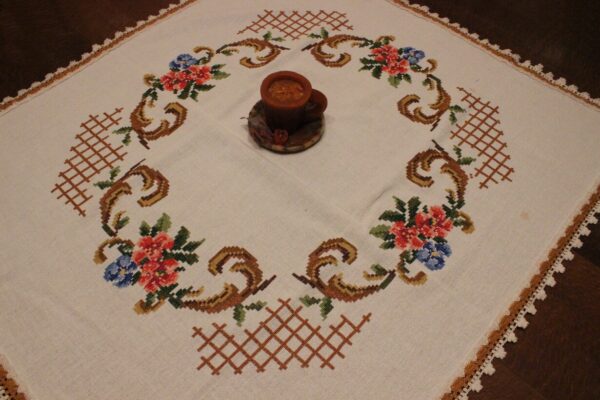
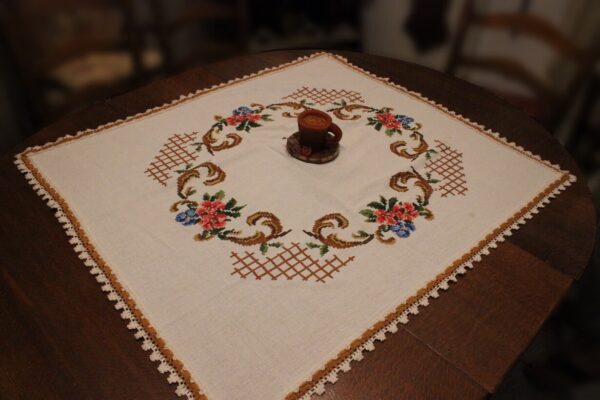
106
The fabric is called “Arachovitiko”. This is a traditional fabric with pills from the Greek village of Arachova. The design motif was sourced from a magazine. Cross-stitch was used. This piece is part of a set: the same fabric and design were also used to create an improvised handmade women’s...
111
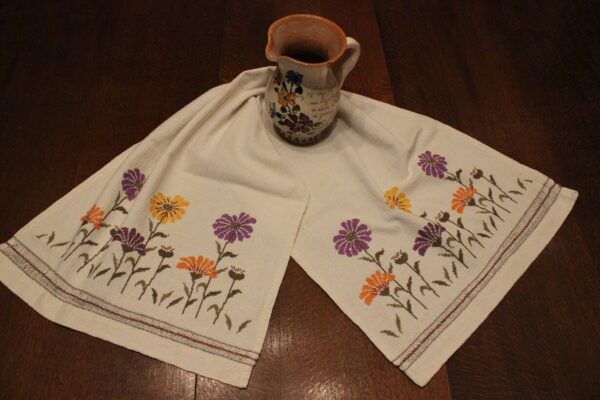
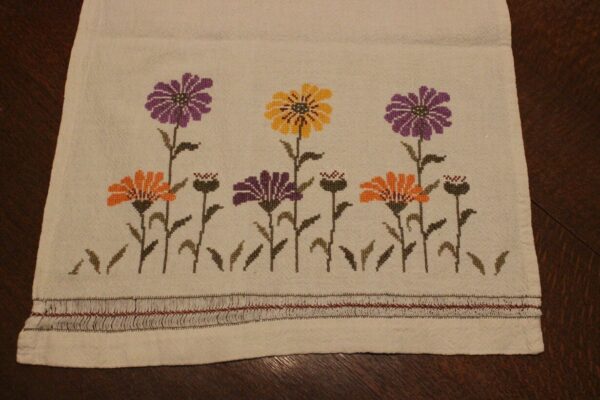
The fabric is called “Arachovitiko”. This is a traditional fabric with pills from the Greek village of Arachova. The design motif was sourced from a magazine. Cross-stitch was used. Some threads were removed to give the appearance of lace. The piece has a more traditional “Greek rural/village” character.
112
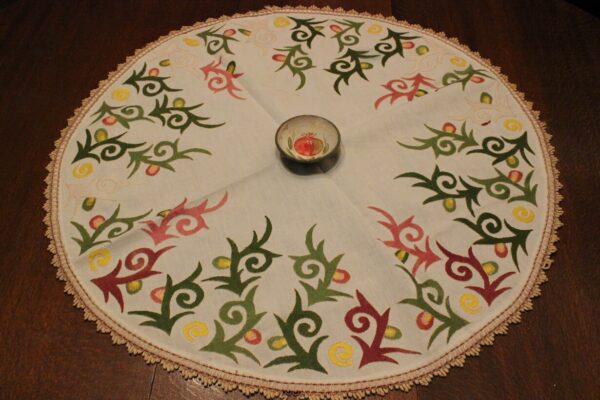
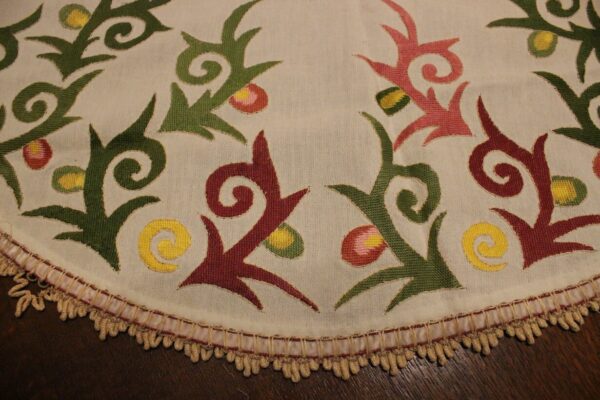
The canvas is fine. The design motif was sourced from a magazine. The stitch is half Gobelin stitch, and the outline is stem stitch (also known in Greek as “rizovelonia or anevato”) in gold thread.