
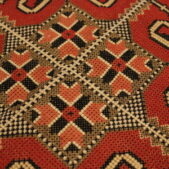
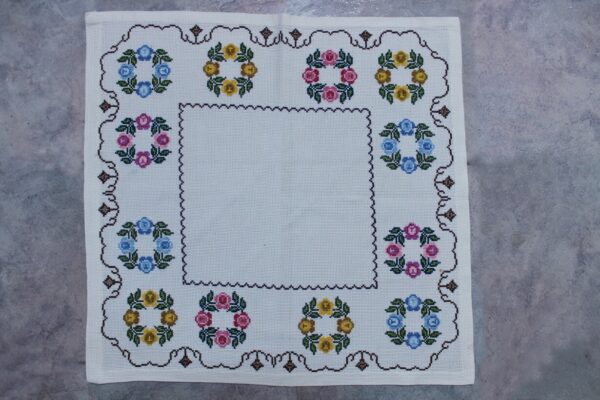
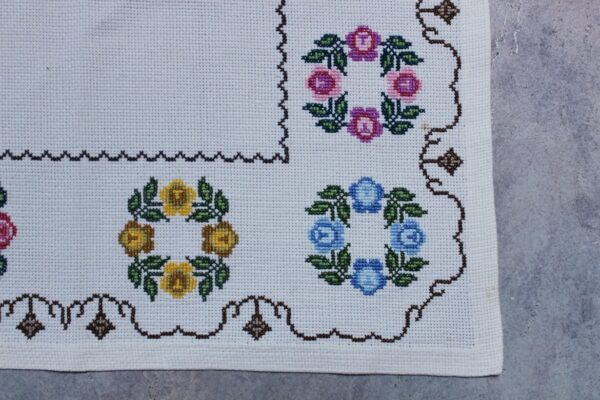
154
The fabric is 6-thread linen. The design motif was sourced from a magazine. Cross-stitch was used. It has a similar style to work No.157.
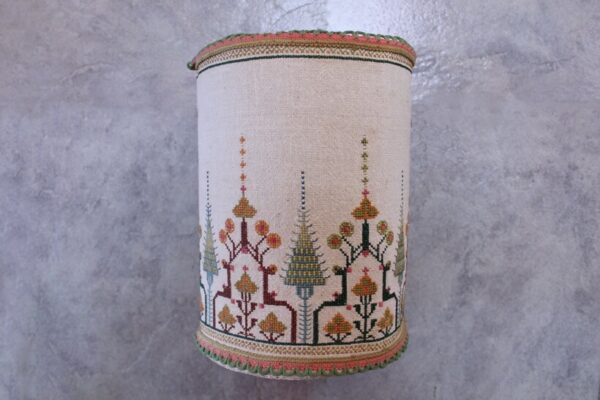
155
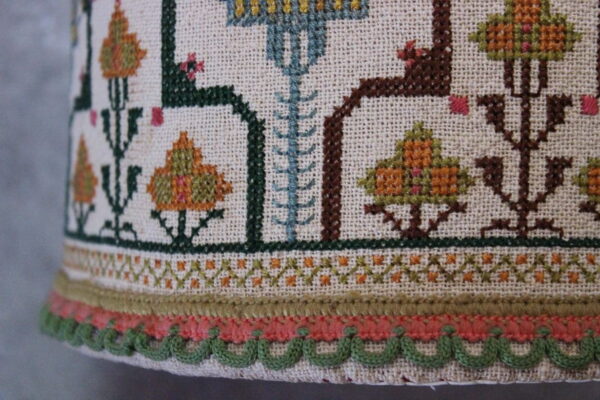
The fabric is called “Arachovitiko”. This is a traditional fabric with pills from the Greek village of Arachova. The motif is inspired by a traditional kitchen apron design from Epirus. Cross-stitch was used.This embroidery piece has been used as a lampshade for a table light (25 cm diameter).
156
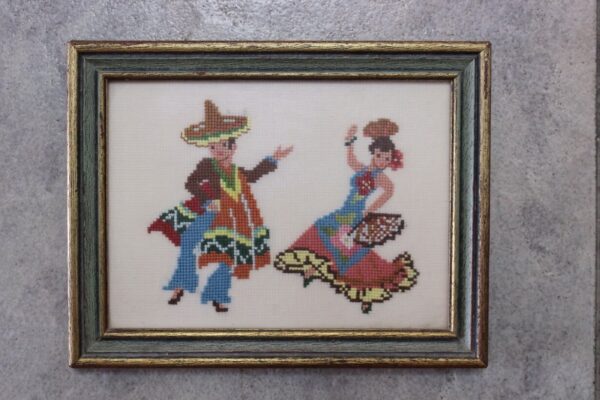
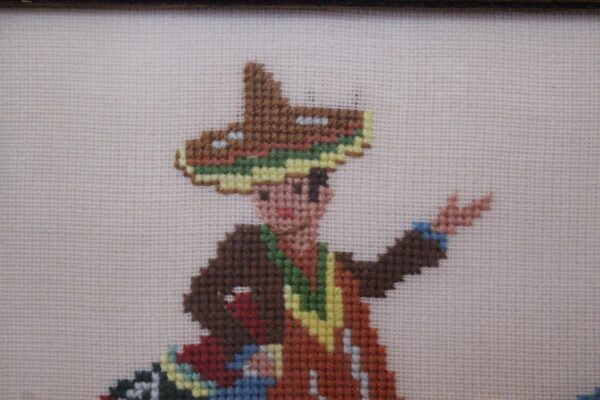
The canvas is fine. The design motif was sourced from a magazine. Cross-stitch was used. This is a piece to decorate a child’s room.
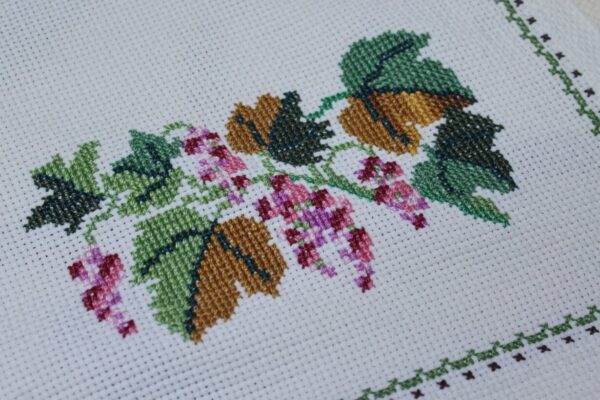
157
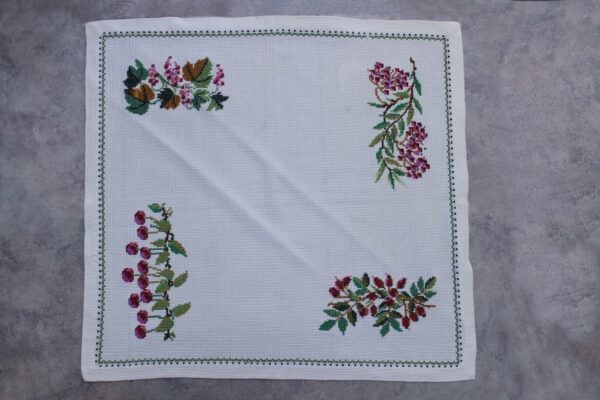
The fabric is 6-thread linen. The design motif was sourced from a magazine. Cross-stitch was used. It has a similar style to work No.154.
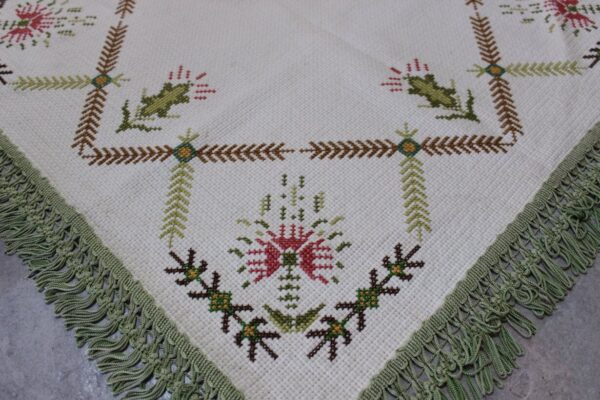
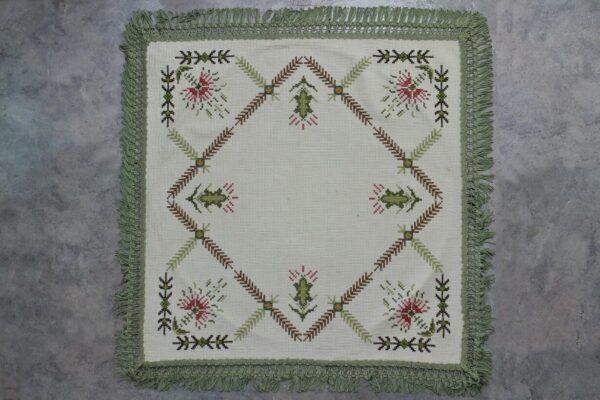
158
The fabric is 6-thread linen. The design motif was sourced from a magazine and used to create this composition. Cross-stitch was used.
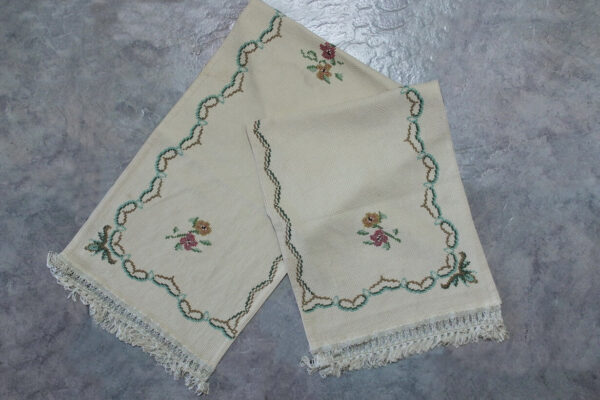
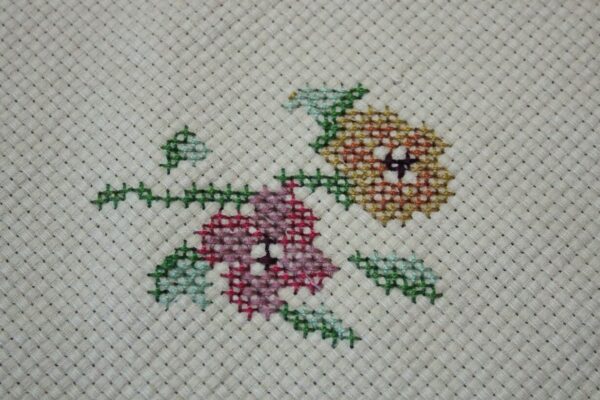
160
The fabric is 6-thread linen. The design motif was sourced from a magazine and used to create this composition. Cross-stitch was used. Only leftover threads and fabric were used (stash busting).
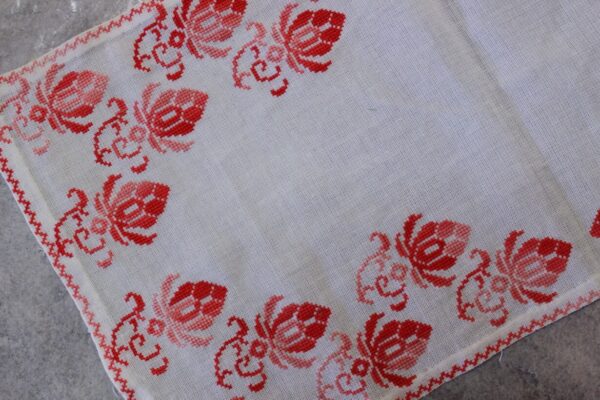
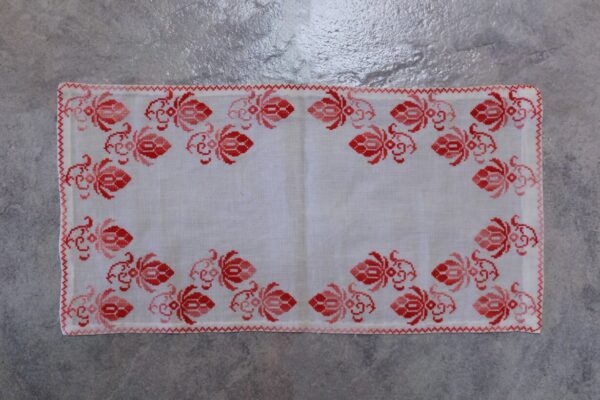
161
A distinctive feature of this piece is that the color is not completely uniform, as variegated thread (with different shades of red) was used. The canvas is fine. The design motif was sourced from a magazine. Cross-stitch was used.
Distinctive
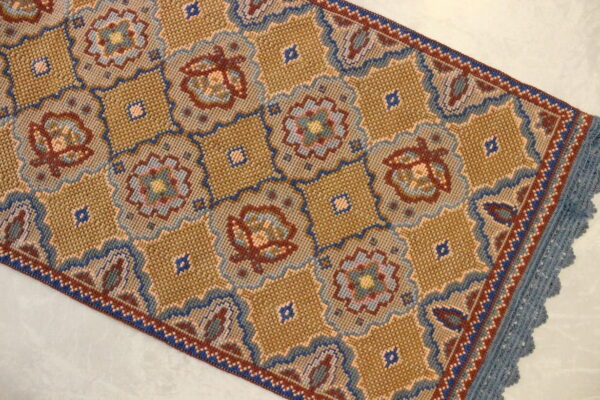
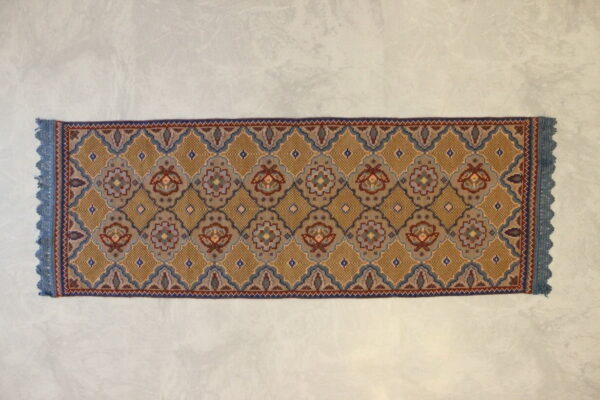
162
The canvas is medium. The design was derived from a previous work. Cross-stitch was used. Only leftover threads were used (stash busting). This piece has been offered as a gift.
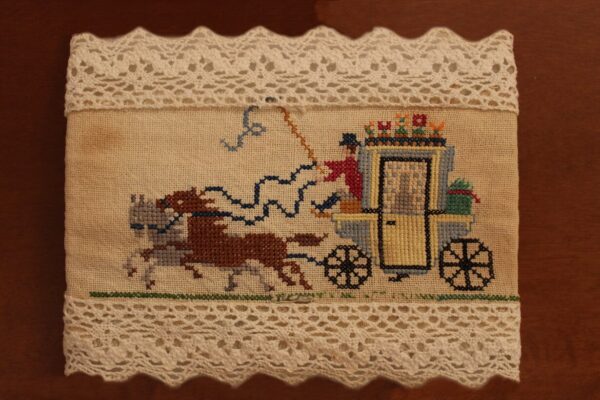
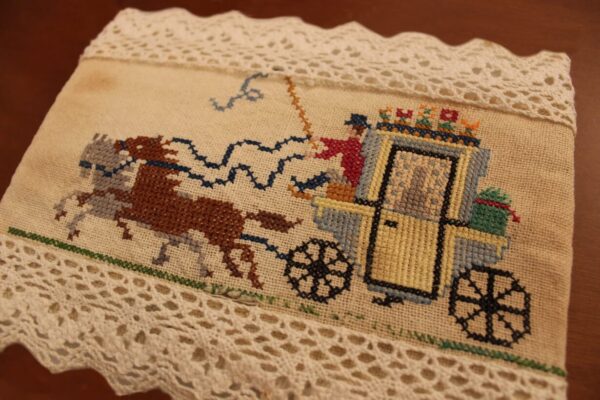
163
This embroidery was created in 1980 and was used as a cover for a handmade pencil holder. Over the years, the pencil holder rusted, as it was made of metal, and thus the embroidery had to be removed. The fabric is called “Arachovitiko”. This is a traditional fabric with pills...
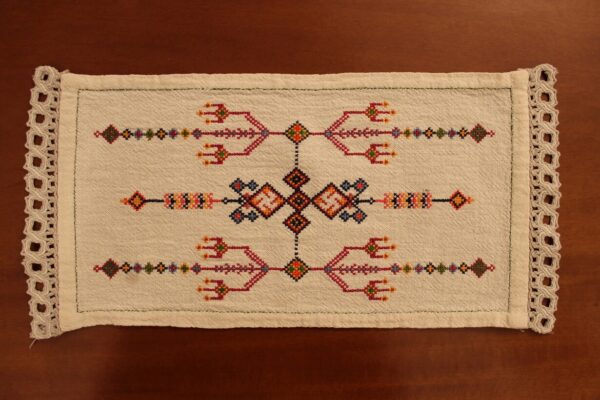
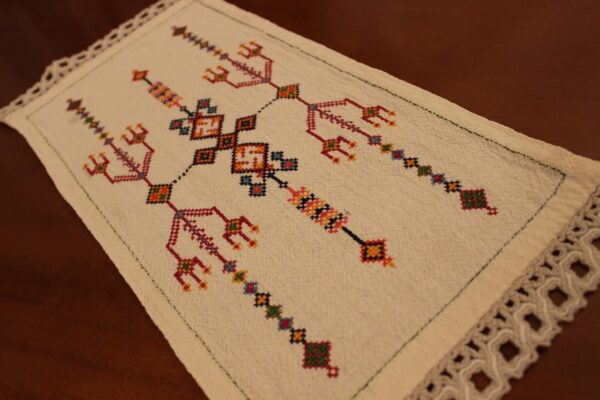
164
The fabric is called “Arachovitiko”. This is a traditional fabric with pills from the Greek village of Arachova. The design motif was created using a basic pattern and repetition. Cross-stitch was used. Together with No.107, it formed a set. These are the smaller pieces of the set.
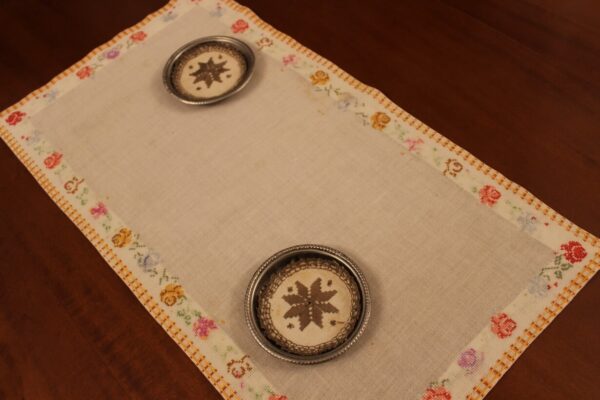
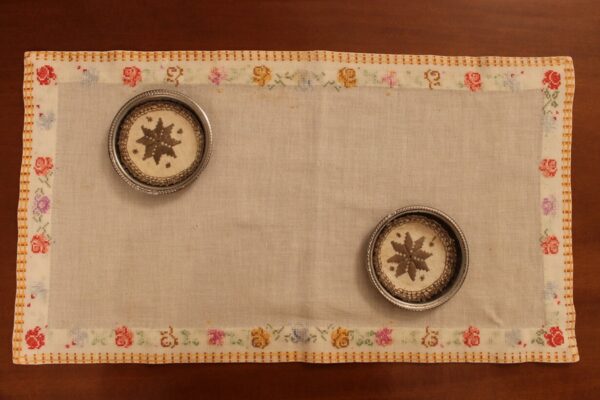
165
This is one of the artist’s early works. The fabric is etamine. The design motif was sourced from a magazine and used to create this composition. Cross-stitch was used.
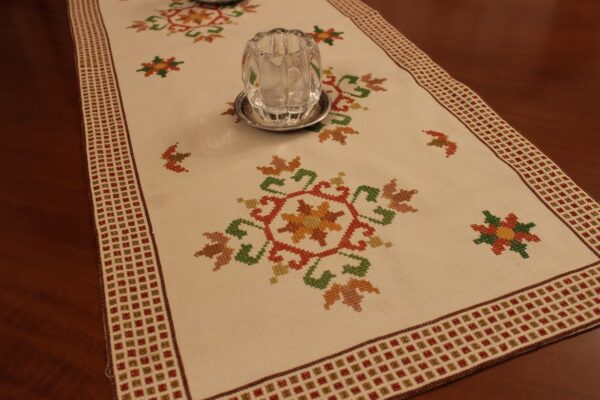
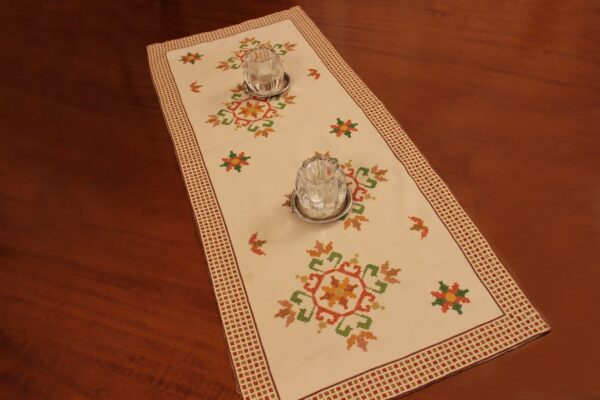
166
The fabric is 6-thread linen. The design motif was sourced from a magazine and involves composition and repetition. Cross-stitch was used.This is part of a set with a repeating motif consisting of 6 pieces: (i) No.103 lampshade and a table topper, (ii) No.166 rectangular runner, (iii) No.167 two curtains, and...
167
The fabric is 6-thread linen. The design motif was sourced from a magazine and involves composition and repetition. Cross-stitch was used. These are two curtains intended to decorate a child’s room or dining room. This is part of a set with a repeating motif consisting of 6 pieces: (i) No.103...
168
The fabric is 6-thread linen. The design motif was sourced from a magazine and involves composition and repetition. Cross-stitch was used. This is a tablecloth intended to decorate a child’s room or dining room. This is part of a set with a repeating motif consisting of 6 pieces: (i) No.103...
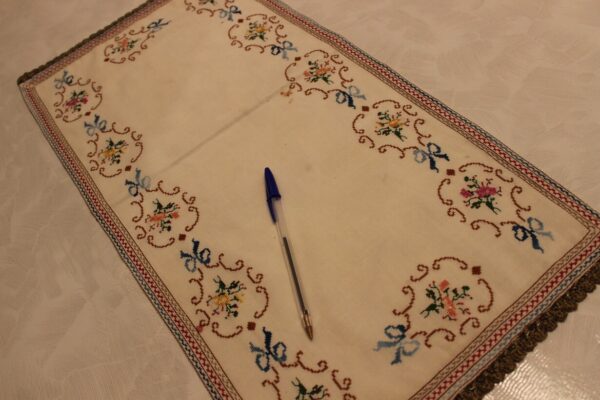
170
The fabric is etamine. The design motif was created using a basic motif (called “mirror” in Greek, because it resembles a small mirror) and repetition. Cross-stitch was used.
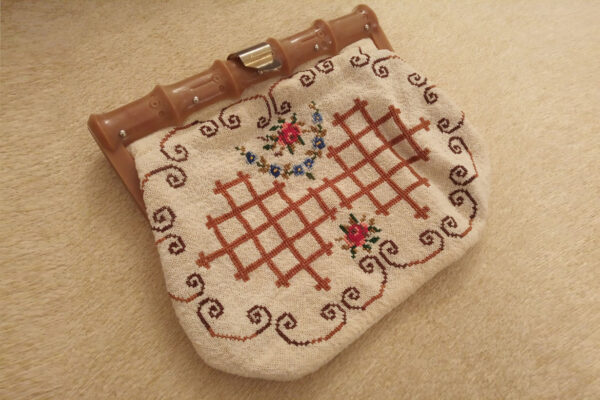
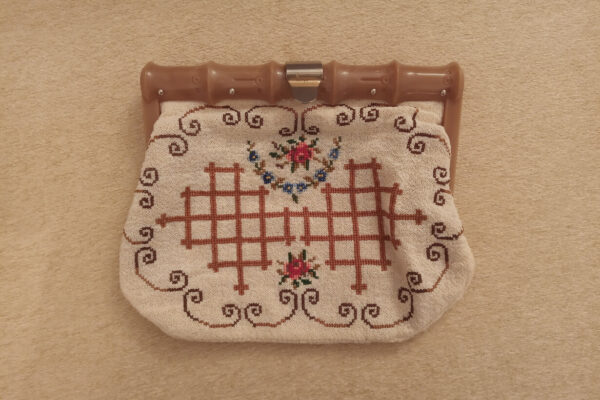
172
This work is inspired by Work No.106. The same fabric and design were also used to create an improvised handmade women’s bag. The fabric is called “Arachovitiko”. This is a traditional fabric with pills from the Greek village of Arachova. The design motif was sourced from a magazine. Cross-stitch was...